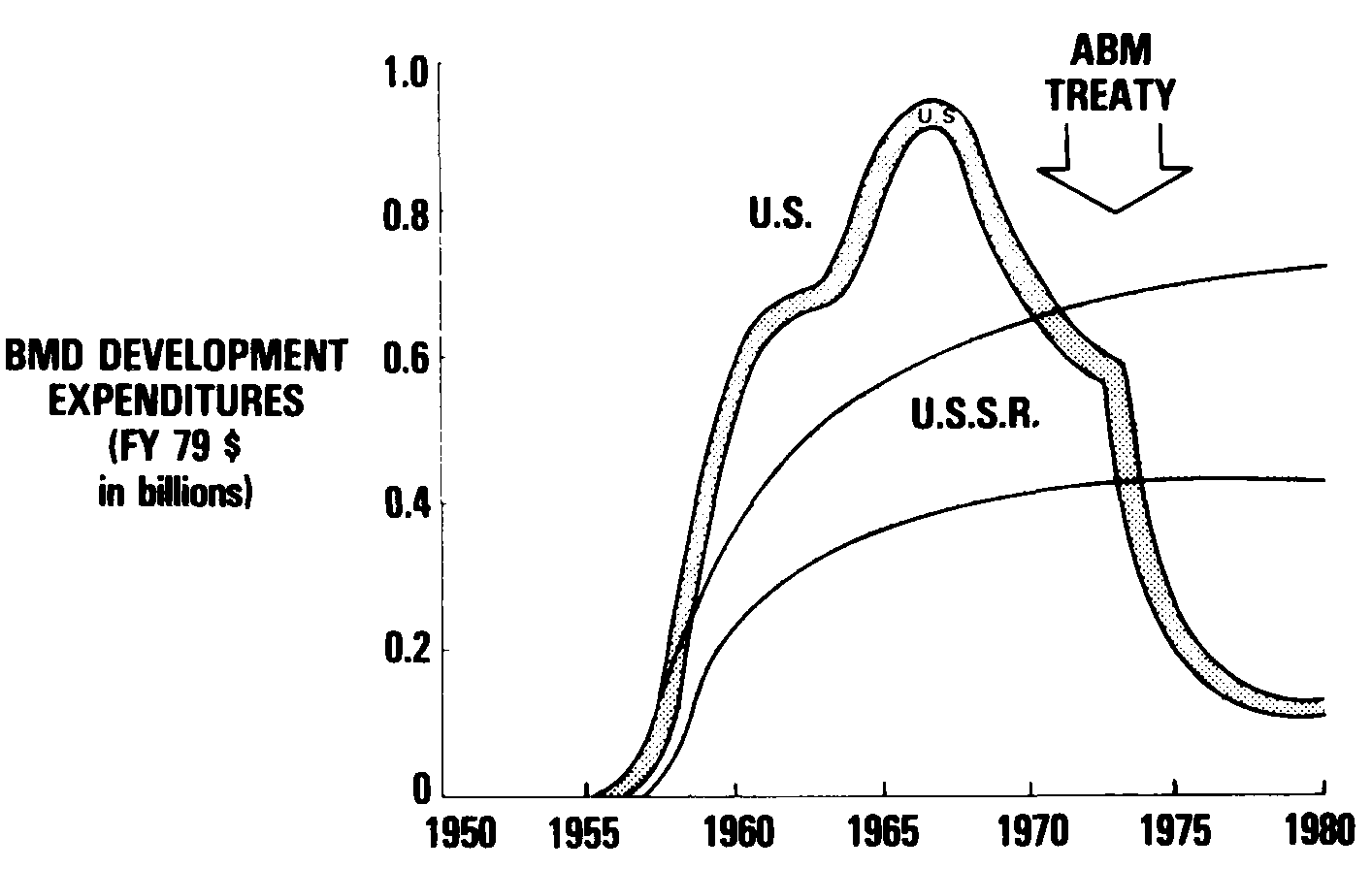
Figure 1 Comparison of U.S. and Soviet BMD Development Program Effort |
SALT
Implications of BMD Options
|
SALT I and the ABM Treaty were attempts to bring under control the strategic nuclear arms race between the United States and the Soviet Union. The stated intent of the ABM Treaty is to constrain the quantity and quality of U.S. and Soviet BMD forces and, by so doing, contribute to curbing the strategic offensive arms race and reduce the risk of nuclear war. This paper will address each of these tenets in terms of the following questions:
What is the ABM Treaty?
What has been the impact of the ABM Treaty?
What are the current U.S. BMD systems and constructs?
What are the current Soviet BMD systems and constructs?
What are the ABM Treaty implications associated with U.S. and Soviet near-term, intermediate-term, and long-term BMD systems?
What are the implications of the ABM Treaty and ABM systems on U.S. policy?
The following discussion will briefly describe the principal elements of the current ABM agreements, i.e., the ABM Treaty, Agreed Interpretations, and Unilateral Statements.
To understand the implications of the ABM Agreements on BMD systems and the potential implications of future BMD systems on ABM Treaty reviews first requires a brief understanding of the basic components of the Agreements. In general, the Agreements, by limiting the quantity and quality of each party’s ABM forces, attempt to ensure that each country leaves unchallenged the penetration capability of the other party's retaliatory missile forces. More specifically, the existing ABM Agreements prescribe that no more than 100 missiles and launchers can be deployed at one designated site (the United States chose Grand Forks, North Dakota, and the Soviet Union chose Moscow). The Treaty specifies numbers and types of ABM radars and defines the maximum size of the deployment area. Additionally, several qualitative limitations deserve mention. Deployment, testing, and development of rapid reload launchers, multiple kill vehicles on interceptors, and sea-based, air-based, space-based or land-mobile ABM systems are prohibited. The development of exotic systems utilizing other physical means (e.g., high energy lasers or particle beams) is subject to discussion in the Standing Consultative Commission. ABM capabilities and force levels not specifically permitted by the Treaty are denied to both signatories.
As a result of the SALT process and the ABM Treaty, the U.S. and Soviet BMD programs have changed relative to each other. Both countries initiated BMD programs in the mid-1950s, but the initial U.S. technology and level of effort far exceeded that of the U.S.S.R. In the following paragraphs, the relative changes in the U.S. and Soviet programs are discussed in terms of the observed changes in the relative levels of effort applied to BMD system technology and systems development.
In the late 1960s, prior to the ABM Treaty, the United States was expending approximately $400 million annually on BMD system technology and system development, plus $100 million annually on supporting advanced technology, or in FY 80 dollars, approximately $800 million and $200 million, respectively. The current level of effort stipulated in the FY 80 budget is slightly over $100 million in each area; i.e., one-eighth the late 1960s level of effort in system technology and system development and one-half the late 1960s level of effort in supporting advanced technology.
No one knows precisely what resources have been or will be dedicated to Soviet BMD programs. However, the cost of the Soviet systems can be estimated by determining what it would have cost the United States to pursue the various Soviet development and R & D programs. The results of this exercise, as illustrated in Figure 1, indicate that, by comparison, the Soviet BMD system development programs in the late 1960s would have required roughly one-half the level of effort expended on the U.S. BMD system development programs of that period. Furthermore, since 1970, Soviet BMD programs have appeared to maintain a steady, gradual rate of growth. (Estimates of Soviet expenditures for supporting advanced technology programs are not available.) There are significant uncertainties and limitations to this type of U.S./Soviet BMD program comparison, but the basic relative trends appear credible, and the implications of these trends may provide insight into future U.S. and Soviet BMD options.
The relative U.S./Soviet allocation of resources to BMD system technology and development programs changed from an approximate U.S. advantage of 2 to 1 in the late 1960s to a possible Soviet advantage of 5 to 1 in 1980. What has been the impact of the ABM Treaty? Two summary responses seem in order: (1) While the SALT process has seriously eroded funding support for the U.S. BMD programs, Soviet BMD programs appear to have remained reasonably stable, and (2) the 5- to 10-year BMD technological lead-time advantage that the United States enjoyed in the late 1960s has eroded substantially. It is conceivable that the Soviet Union today has the advantage in some aspects of BMD system technology.
|
Figure 1 Comparison of U.S. and Soviet BMD Development Program Effort |
The United States has had no operational BMD system since the 1974 decision to dismantle the Safeguard site at Grand Forks, North Dakota. However, there are several system technology programs and constructs that could provide the basis for future BMD options. This section will briefly describe each of these programs and constructs. Components of the Baseline Terminal Defense System have been under evaluation at Kwaj alein Missile Range for several years. This system has evolved from Site Defense, which in turn evolved from the endoatmospheric portion of the Safeguard system and consists of an upgraded Sprint interceptor, a small (relative to the Safeguard Missile Site Radar, or MSR) phased array radar, and a commercial computer.
The Low Altitude Defense System (LoADS) and the Layered Defense System (LDS) are the principal candidates to become future BMD systems, but at this point in time both LoADS and LDS are only constructs. LoADS, in the early stages of system definition, is envisioned to become a compact, relatively inexpensive, rapidly deployable terminal defense system that could be deployed with an MX missile in a mobile or transportable basing mode. A baseline system has not yet been defined, but such a system might be comprised of small, single-stage interceptors and very small phased array radars that could, like the MX, be moved from launch point to launch point in a multiple aimpoint system.
The current LDS baseline consists of an exoatmospheric, or overlay, defense, as well as an endoatmospheric, or underlay, defense. Either the Baseline Terminal Defense System or LoADS could be used as an underlay. The overlay is a totally different independent system comprised of an exoatmospheric sensor in the form of a short-duration probe or a satellite system and an exoatmospheric interceptor of the Spartan type, which has its own sensor system that delivers multiple non-nuclear kill vehicles equipped with homing sensors. Each of these sensors on the probe, interceptor, and kill vehicle employs long-wavelength IR optical systems designed to cope with the severe threat environment (i.e., a large number of incoming reentry vehicles and penetration aids) to which the Safeguard system was vulnerable. Later in this paper, the SALT implications of each of the systems will be discussed, but before addressing these issues it is necessary to describe current Soviet ABM capabilities.
[* – All information concerning Soviet BMD systems was derived from two publications. The Soviet War Machine and Jane's Weapons Systems. 1979-80 (see Selected References).]
There is not a significant amount of information in the unclassified literature concerning the Soviet ABM program. However, because the Soviet systems have been around a long time, the basic characteristics of the systems and the program are available. The only operational Soviet system, the ABM-1 system at Moscow, was deployed in the mid 1960s, and many of the systems in the current R & D program apparently have been in various stages of testing since the late 1960s and early 1970s. These systems are the product of an evolutionary program that has not produced a multitude of surprises. The Moscow system contains 64 Galosh BMD interceptors that were already deployed when the ABM Treaty was signed. There was no attempt by the Soviets to expand this system to the 100 launchers permitted by the Treaty. The Try Add engagement radars and Dog House battle management radars are deployed at the Moscow complexes, and presumably the remotely deployed, outward looking, long-range Hen House radars provide early warning and battle management information. (Try Add, Dog House, and Hen House are NATO designated names for these systems.) It has been hypothesized that the SA-5 air defense interceptor, several modern ground-based radars, and space-based sensors may also have BMD roles.
In addition to the Moscow ABM-1 system, there are believed to be at least two new Soviet BMD development programs. A test program designated the ABM-X-3 is near, or at, operational capability. This program is reported to be developing a rapidly deployable system comprised of a Galosh follow-on interceptor designated the SH-4, a phased array radar, a tracking radar, and possibly a high-performance endoatmospheric interceptor. Another BMD program is said to be in the early stages of development and may be ready for testing in the near future.
Any analysis of the implications of possible BMD deployments on the ABM Treaty must address the following issues:
When could the system achieve initial operational capability (IOC)?
What revisions to the existing ABM Agreements would have to be made in order to legally permit deployment of the system?
How might these revisions be accomplished?
What is the net effect to the strategic balance of both sides implementing the revisions?
Would the strategic balance be more or less stable in light of a potential Soviet breakout after implementing the revisions?
Since the revisions to the ABM Treaty would most likely follow the 1982 and subsequent five-year ABM Treaty reviews, it is appropriate to discuss the implications of the Treaty to BMD systems, and vice versa, in terms of these time periods. This approach is summarized by Figure 2.
Figure 2 – THE BMD PROGRAM IMPLICATIONS |
||||||||
|
|
1977 |
<NOW> |
1982 |
|
1987 |
|
1992 |
|
|
|
1ST TREATY REVIEW |
|
2ND TREATY REVIEW |
|
3RD TREATY REVIEW |
|
4TH TREATY REVIEW |
|
|
|
|
EXISTING ABM TREATY |
|
RELAXED TESTING LIMITS? |
|
RELAXED DEPLOYMENT LIMITS? |
|
NEW TREATY? |
|
U.S. BMD CONCEPT |
|
SDS |
|
LoADS |
|
LDS |
|
|
|
SOVIET BMD CONCEPT |
|
ABM-X 3 |
|
ABM-X-3 VARIANT |
|
ADVANCED LAYERED SOVIET BMD |
|
|
|
U.S. DEPLOYMENT OBJECTIVE |
|
DEPLOYABLE MM DEFENSE |
|
DEPLOYABLE MM DEFENSE |
|
MX AND MM DEFENSE |
|
|
|
SOVIET DEPLOYMENT OBJECTIVE |
|
"THIN” MOSCOW DEFENSE |
|
TERRITORIAL AND SITE DEFENSE |
|
TERRITORIAL AND SITE DEFENSE |
|
|
|
NET STRATEGIC ADVANCE TO U.S. |
|
UNCERTAIN. POSSIBLY NEGATIVE |
|
UNCERTAIN |
|
POSITIVE |
|
|
|
STABILITY ISSUES U.S. PERSPECTIVE |
|
SOVIET BREAKOUT POTENTIAL IS DESTABILIZING |
|
UNCERTAIN |
|
RETALIATORY FORCES ARE SURVIVABLE – BMD IS STABILIZING |
|
|
Present to 1982
The components of the U.S. Baseline Terminal Defense System could be deployed in the early 1980s and be in compliance with the restrictions contained in the existing ABM Agreements. However, the provisions of the existing Treaty would limit the United States to deploying no more than 100 missiles and launchers at Grand Forks. North Dakota, with all components being fixed and land based. This option would provide only a limited deterrent to the Soviet Union and be of virtually no military value to the United States. To increase the military potential of this system would require relaxing the provisions of the ABM Treaty to (1) increase the number of permitted launchers, missiles, and radars to allow at least one interceptor for each missile to be defended, (2) permit deployment at all launch areas or some desirable subset of the ICBM launch areas, (3) permit defense of other critical strategic assets, and (4) permit a mobile or transportable basing mode to increase the survivability and, as a result, the effectiveness of the BMD.
Between now and the 1982 ABM Treaty review, the Soviet Union has only three legal unilateral BMD deployment options: (1) expand the ABM-1 system to the permitted 100 launchers, (2) partially upgrade the current ABM-1 system with new system components, or (3) replace the ABM-1 system with the ABM-X-3 system. Each of these options could only be exercised for the Moscow deployment area, because in the 1974 protocol to the ABM Treaty, the Soviet Union designated Moscow as the only allowable Soviet ABM deployment area. None of these options, if exercised by the Soviets, would significantly impact on the strategic balance. Both the ABM-X-3 and an upgraded ABM-1 would be vulnerable to a precursor attack against the BMD assets, and the 100-missile limit could provide virtually no deterrence or protection against the U.S. strategic force. To increase the military potential of these systems would require the same type of Treaty revisions suggested for the U.S. system.
1982-1987
In 1982, the United States could legally, unilaterally decide to deploy a BMD system at either Grand Forks, North Dakota, or Washington, D.C. Both options require only that the United States notify the Standing Consultative Commission between October 1982 and October 1983. The Soviet Union, in addition to modernizing or replacing the Moscow system, could also exercise the option to dismantle or destroy the Moscow system and to deploy a BMD system in an area containing ICBM silo launchers—provided that the area is at least 1300 km from Moscow and that prior to initiation of construction, notification is given to the Standing Consultative Commission.
In addition to the Baseline Terminal Defense System, the U.S. LoADS could achieve IOC towards the end of the 1982-1987 frame. However, it is difficult to rationalize either a Baseline Terminal Defense System or a LoADS treaty-constrained deployment at either Grand Forks or Washington, D.C., as anything other than a full-scale system evaluation. The existing limitations concerning the number of launchers, type of launchers, and type of basing mode preclude a cost effective deployment of these systems for defense of fixed silos or population. LoADS is being designed as a BMD option for a mobile MX system that will not be totally operational in this time period. If the ABM Treaty were revised to permit more than 100 missiles and 60 launchers to be located at more than one site, a LoADS in defense of Minuteman might be cost effective.
The status of the Soviet BMD program in the 1982-1987 time frame is, at best, conjecture. However, it is reasonable to assume that a variant of the ABM-X-3 would be a likely deployment candidate. As in the case of the U.S. LoADS, there is no compelling rationale for the Soviet Union to deploy this system. As a replacement for the ABM-1 system at Moscow, it would be more effective and would provide system evaluation information, but it would not provide any significant level of defense deployed within the constraints of the existing ABM Agreements. However, if the force level and deployment area limitations in the existing Agreements are relaxed, a Soviet BMD could provide an effective defense of military assets and a deterrent to an attack on economic and industrial assets.
It is not within the scope or security limitations of this paper to determine, quantitatively, the net advantage to the United States or the Soviet Union of revising the ABM Treaty. However, a cursory analysis of Baseline Site Defense System, LoADS, and ABM-X-3 deployment options in the 1982-1987 time frame reveals one potential disadvantage. The Soviet system is a layered system that defends a relatively large area, whereas the U.S. systems provide strictly a point defense. Consequently, a revision to the treaty that greatly increased the number of interceptors and deployment areas might permit the Soviet Union to defend legally a significant portion of its land mass while permitting the United States to defend only a large number of ICBM silos. It is not clear that a revision permitting an unambiguous U.S. system and an ambiguous Soviet system would necessarily produce an unstable strategic environment, but it would most likely produce a net military advantage to the Soviet Union. This problem could be minimized by permitting deployment areas that are not collocated with other military or industrial assets (e.g., enforcing the provision prohibiting deployment closer than 1300 km from Moscow).
1987-1992
There are many more uncertainties with the post-1987 period. U.S. offensive systems (e.g., MX, cruise missile, Trident) projected to reach IOC in this period will affect U.S. BMD requirements and may have a significant impact on Soviet perceptions and requirements for BMD. Conversely, new Soviet offensive systems could have a greater than projected impact on U.S. requirements for BMD. Other uncertainties affecting BMD systems in this time frame include: the status of arms controls for offensive systems (i.e., no SALT, SALT I, SALT II or SALT III could be in force); the results of the 1982 and 1987 ABM Treaty reviews; and limitations resulting from other arms control agreements such as the proposed ASAT Treaty. However, for purposes of this discussion, the preferred U.S. BMD option in the 1987-1992 period is assumed to be the Layered Defense System, or LDS, as described earlier; the LoADS should be available as either a rapidly deployable response option or as part of the LDS. A follow-on to the Soviet ABM-X-3 could be available by 1987. The characteristics of this system are unknown, but based on the evolutionary nature of the Soviet BMD program, it is not unreasonable to assume that the ABM-X-3 follow-on could be an advanced layered BMD comparable to the U.S. LDS.
As stated previously, several critical components of the U.S. LDS are clearly not consistent with the existing ABM Agreements. For example, the LDS is not an effective system if the overlay interceptor cannot utilize multiple kill vehicles, but according to the Agreed Interpretations of the ABM Treaty, Article V of the Treaty includes obligations not to develop, test, or deploy BMD interceptors that can deliver more than one independently guided warhead. It is also not clear whether or not components such as the early warning satellites, exoatmospheric probes, and airborne optical platform are precluded by the Article V restriction on air-based and space-based systems. Furthermore, a large-scale deployment of LDS to defend ICBM and possibly other strategic assets would require more than 100 launchers and more than the one launch area permitted by Article III. Such a deployment is also inconsistent with the intent of Article I, in which both parties agree to limit ABM systems and not to deploy a territorial or regional defense.
A Soviet advanced LDS would probably require similar changes to the existing ABM Treaty. The system would likely have a regional or territorial capability and could utilize sea-based, air-based or spacebased systems. Such a system centered at Moscow would defend a large portion of the Soviet population and economic assets and, centered at ICBM launch areas, would provide a deterrent to a counterforce attack.
Soviet warfighting strategy may dictate that the Soviet Union anticipate a U.S. attack and attempt to launch a preemptive counter-force attack as a means of limiting damage to Soviet strategic forces and assets. Such a Soviet policy would require launching ICBMs “on indication" of a threat or on warning. It is likely that, if the Soviet Union had an effective LDS, their negotiating priorities would be (1) a national defense or a set of region defenses, (2) an ICBM defense to minimize the threat of a failure in the early warning system that precludes preemption or launching under attack, and (3) an ICBM defense to maximize the survivability of a strategic secure reserve.
In general, if the United States and/or the Soviet Union wanted to revise the ABM Treaty (as it exists in 1979) to be compatible with the current U.S. LDS concept, extensive revision of the Treaty would be required and a complete renegotiation of the Treaty would appear to make sense, particularly if linked to further reductions in offensive weapon systems in a future SALT agreement.
Long-Range Weapon Concepts
Both the United States and the Soviet Union have pursued active directed-energy research programs to investigate the potential of high energy laser (HEL) and particle beam weapon systems suitable for BMD applications. Due to the limited availability of information concerning Soviet military-directed energy programs, only U.S. programs are discussed in this paper.
One HEL system being considered by the United States utilizes an orbiting laser or particle beam system that would attack ICBMs during the boost phase of flight. U.S. HEL technology is more advanced than the U.S. particle beam technology, but existing HEL concepts suffer from lack of miniaturization (one concept would require 10 to 20 shuttle payloads per system), system flexibility, and threat vulnerability information. These systems also present unique problems for the ABM Treaty. As stipulated in the Agreed Interpretations. any ABM system or its components “based on other physical principles” would be subject to review by the Standing Consultative Commission and possible limitations imposed by the amendment process. However, because of the technology, arms control, and operations limitations, it is unlikely that either the United States or the Soviet Union will deploy a directed-energy BMD weapon system in this century.
As stated in Article I of the existing ABM Treaty, both the United States and the Soviet Union undertook to limit BMD missile system and, in particular, sought to preclude the capability to deploy a territorial or regional defense. This was accomplished by establishing a very effective set of quantitative and qualitative limitations that has made BMD an unattractive deployment option for both the United States and the Soviet Union. The result was an offense-dominated world. Both parties recognized the value, in terms of crisis stability, of maintaining the survivability of their ICBM forces, but advances in guidance and sensor technology have tended to negate attempts to harden silos or devise alternative ICBM basing modes. Consequently, other methods of making ICBMs survivable are being examined, and the implications of a defense-dominated world are being considered.
Defense of MX
With the introduction of the new generation of Soviet ICBMs, the U.S. Minuteman silo-based ICBMs will no longer be able to withstand a first strike. United States options include abandoning the ICBM concept and switching from the Triad to a strategic dyad policy, revising U.S. policy to one of launch on warning of attack, devising alternate basing options for the ICBMs, or defending the ICBMs. Initially the United States has decided to deploy the new MX missiles in a mobile basing mode that contains multiple launch points for each missile. If the United States can generate enough aimpoints and maintain deception, the Soviet Union cannot target more than one weapon per aimpoint, and with current forces might not have enough reentry vehicles (RVs) to target even one RV to each MX and Minuteman aimpoint. This would preclude a Soviet first strike. However, both U.S. military and congressional studies have indicated that American proliferation of aimpoints could result in Soviet fractionation (putting more RVs on each missile) for their ICBMs and SLBMs. The proliferation and fractionation could expand to ridiculous limits if not curtailed by SALT, other political actions, or simple economic considerations.
BMD provides an alternative to proliferating aimpoints. Because the vulnerabilities of the BMD and multiple aimpoint (MAP) basing mode are totally different, developing a high-confidence counterforce attack would be more difficult for the Soviet planner. U.S. military and congressional studies have also indicated that for each combination of threat, MX basing mode, and BMD examined there is some optimum number (typically 20 to 30) of launch points such that if additional MX survivability is required it would be more cost-effective to deploy a BMD of the existing MAP than to construct additional launch points. Consequently, there could be strong political arguments to support BMD, particularly if the BMD system deployed utilizes only non-nuclear kill vehicles. Any system that provides crisis stability, is cost-effective, requires less disruption of the environment, and minimizes proliferation of nuclear weapons would be politically attractive, and a BMD deployed with MX can potentially achieve each of these objectives.
Other Defense Considerations
A defense of the existing Minuteman silos could also prove an attractive option under two sets of circumstances: (1) the MX/MAP program is cancelled and (2) a new missile is deployed in the Minuteman silos. In the first case, a BMD would be required to maintain the credibility of the Triad; studies have shown that with a layered defense revising the ABM Treaty to permit such a deployment can be in the best interests of the United States. The second case can exist whether or not the MX/MAP program achieves its milestones. If MX is deployed in a MAP basing mode, the United States may be faced with a requirement to modernize its non-MIRVed forces. One solution to such a requirement would be to deploy a new ICBM in the existing Minuteman silos. Deploying a new ICBM in the existing silos may also make sense if the MX/MAP program fails. In either case, a new ICBM deployed in a silo makes sense only if the silos are defended.
Another consideration that involves BMD options is the concept of changing U.S. strategic policy from one of mutual assured destruction to one of mutual assured survival; i.e., from offense domination to defense domination. To achieve a defense-dominated world, offensive forces should be significantly reduced and all aspects of strategic defense, including a territorial BMD, should be employed. The feasibility of achieving a defense-dominated world and the stability issues associated with such a transition require further study.
Future Treaty Reviews
For a BMD system to be survivable, it should be deceptively based; to be cost effective and minimize the requirement for nuclear weapons, it should be a layered defense system with an exoatmospheric non-nuclear multiple kill vehicle capability. (Eventually, a non-nuclear endoatmospheric system would also be available.) However, to permit deployment of this type of system requires the following changes in the ABM Treaty:
Articles I and III should be revised to change the implications and the limitations that restrict BMD deployment areas and force levels. A territorial defense system or several regional defense systems composed of considerably more than 100 launchers and missiles and more than 18 radars would have to be permitted.
Article V would have to permit air-based, space-based, or mobile land-based BMD systems.
Article V and the Agreed Interpretations would have to be revised to permit multiple kill vehicles.
Article VI might be rephrased to permit space-based, air-based, and sea-based early warning radars.
Article XII should be interpreted to state that a deceptive MX-type basing mode does not constitute deliberate concealment measures which impede verification by national technical means.
The changes required are extensive, but if they promote an environment in which the strategic offensive forces of both countries are survivable, then crisis stability is more achievable. Also, if stability can be achieved by way of a defensive deployment to ensure survivability rather than an expansion of offensive forces to ensure mutual assured destruction, the two parties will have promoted the fundamental objectives of the ABM Treaty—reductions in strategic offensive arms and nonproliferation of nuclear weapons.
Within the general framework of the limitations specified above, the United States and the Soviet Union could investigate the desirability of defending assets other than ICBM launch areas and the national capitals. Assets such as strategic bomber bases, communication nodes, specific port facilities, and critical economic assets could also be considered. In short, these revisions would be part of the transition required for the United States to change from a policy of ‘‘mutual assured destruction” to a policy of “mutual assured survival.”
The SALT implications of the U.S. and Soviet BMD options discussed in this paper should change significantly over the next ten years. From a U.S. perspective, two factors will have the greatest impact on American motivations to pursue BMD options. First, the deployment of the MX missile in a multiple aimpoint basing mode could prompt the Soviet Union to pursue offensive reactions such as fractionation and possibly to consider defensive options such as an expanded BMD. The second factor affecting U.S. BMD options will be the perceived effectiveness of the U.S. BMD systems. If the technology programs to develop an exoatmospheric interceptor with multiple kill vehicles, optical sensors, and non-nuclear warheads prove successful, many of the political problems (e.g., cost and nuclear proliferation) confronting a BMD deployment option could be diminished. Development of an effective non-nuclear endoatmospheric interceptor capability would make BMD an even more attractive option. However, neither the MX in a multiple aimpoint basing mode nor an operational layered BMD will be available until the late 1980s or early 1990s.
Between now and the 1982 Treaty review, the only two U.S. BMD options are to abrogate the Treaty or to deploy BMD within the limits of the existing agreements. There is currently no rationale to justify abrogation of the Treaty, and there does not appear to be sufficient military advantage to warrant deploying a Site Defense System limited to 100 interceptors.
The 1982 ABM Treaty review provides additional options; i.e., revising the Treaty to permit additional forces and relaxing the qualitative restrictions to permit more capable systems. However, since the U.S. layered BMD will not be available until after the 1987 Treaty review, these options have to be considered in terms of the U.S. Baseline Site Defense System or possibly a variant of LoADS that should achieve IOC in this period and a Soviet variant of the ABM-X-3 system. The ability of any of these systems to counter a large-scale attack is unknown. However, it is reasonable to assume that the net change to strategic stability resulting from a deployment of those systems would be minimal. (If either side perceived a net disadvantage, the revisions would not be negotiated.) The more critical issue might be the potential instability resulting from the revisions (i.e., would a breakout become more attractive?). In this context, the broad area potential and rapid deployment potential of the Soviet ABM-X-3 follow-on is more destabilizing. Consequently, the U.S. negotiating position for the 1982 Treaty review might be to seek only those clarifications and revisions required to optimize the research, development, testing and engineering (RDT&E) program for the layered BMD system, and possibly the option to deploy in the new MX basing area.
The critical Treaty review will probably be in 1987. By this time, Soviet responses to perceived U.S. MX deployments and U.S. advances in layered BMD technology should be evident. Should the United States and the Soviet Union decide that layered BMD provides an attractive, stabilizing option, the 1987 and possibly the 1992 Treaty reviews would provide the mechanism for making the required radical revisions to the Treaty discussed earlier in this paper.
What can be done now and in the future to optimize the U.S. options entering the 1982,1987, and 1992 ABM Treaty reviews? Based on this analysis, the following observations can be made:
In the near term, the viability of the ABM Treaty must be maintained.
The LoADS and LDS RDT&E programs must produce effective, deployable BMD systems by 1987. If these programs are successful and timely, U.S. decision makers will have the deployment, negotiating, and response options necessary to negotiate future ABM and other SALT treaties.
A greater understanding of the potential impact on the strategic balance of both U.S. and Soviet BMD systems is required. Any future debates on treaty revisions or system acquisitions are going to hinge on the perceived effectiveness of these systems, which to a large extent will depend on the perceived credibility of the supporting arguments.
A coherent U.S. BMD strategy is required to take advantage of the relationships existing between U.S. and Soviet BMD objectives, the perceptions each has of the other’s objectives, and the interaction of both the U.S. and Soviet BMD programs with the other components of their respective strategic programs.
In the long term, there may be a net strategic advantage to the United States in permitting significant revisions to the ABM Treaty. This could mark a major shift in the U.S. policy away from the concept of mutual assured destruction.
1. Department of Defense Annual Report, Fiscal Year 1980, Washington, D.C., U.S. Government Printing Office, 1979.
2. Military Balance, 1978-1979, International Institute for Strategic Studies, London, 1978.
3. Statement of Paul H. Nitze Before the Committee on Armed Services of the House of Representatives, February, 1979.
4. Retaliatory Issues for the U.S. Strategic Nuclear Forces, Congressional Budget Office, Washington, D.C., U.S. Government Printing Office, June 1978.
5. SALT II and the Costs of Modernizing U.S. Strategic Forces, Congressional Budget Office, Washington, D.C., U.S. Government Printing Office, September 1979.
6. The MX Missile and Multiple Protective Structure Basing: Long Term Budgetary Implications, Congressional Budget Office, Washington, D.C., U.S. Government Printing Office, June 1979.
7. The Soviet War Machine, Salamander Books, Ltd., London, 1978.
8. Jane's Weapon Systems, 1979-80, MacDonald and Jane’s Publishers, Ltd., London, 1979.