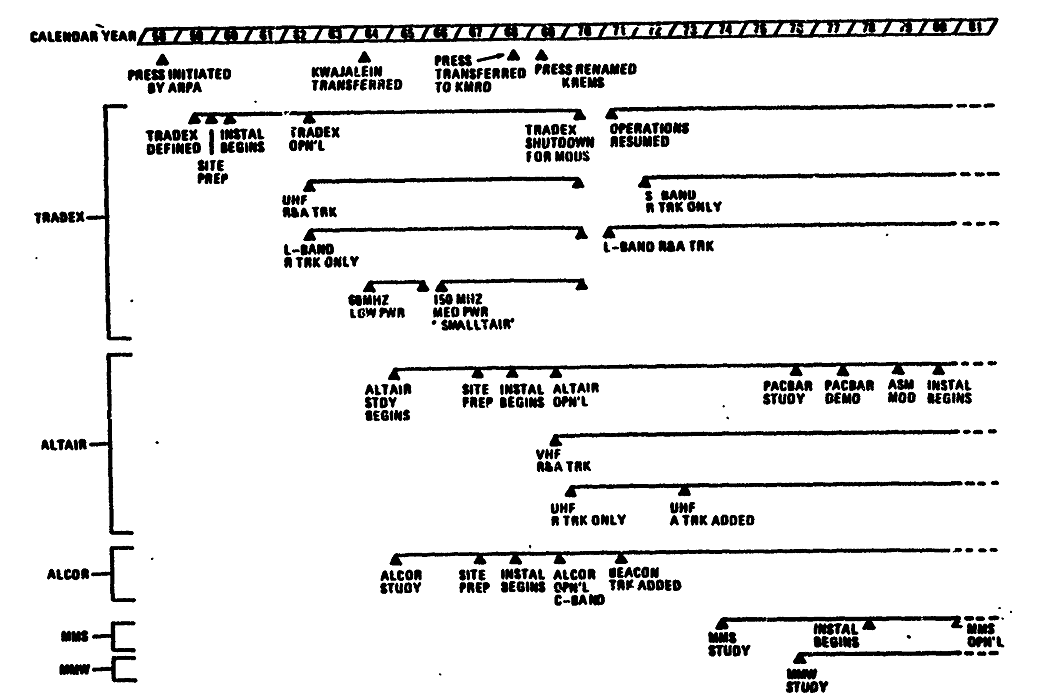
Figure 1-3. Chronology of Radar Changes (from Hottcamp, op. cit.)
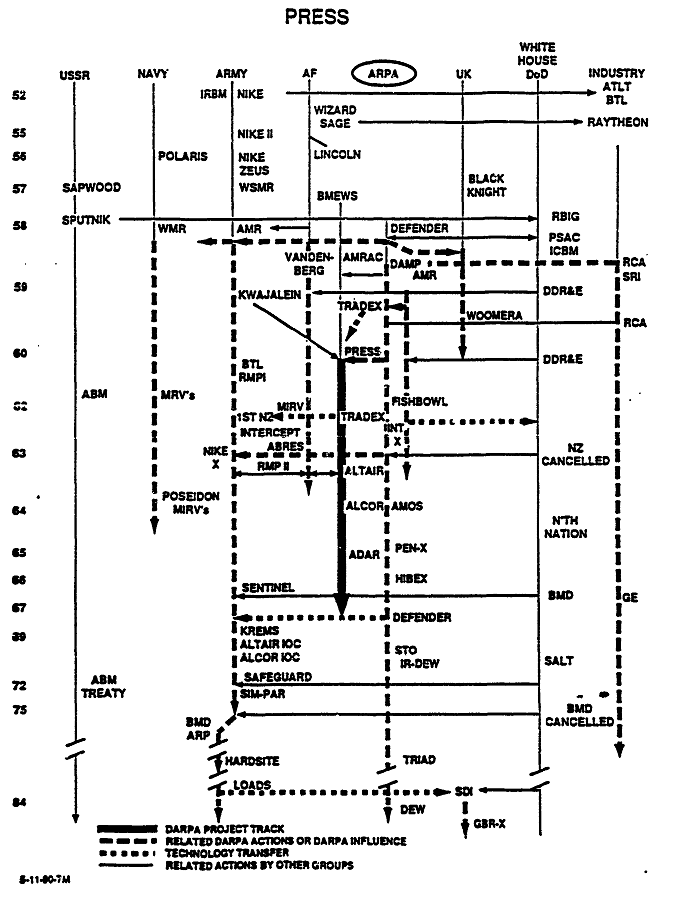
Project PRESS (Pacific Range Electromagnetic Systems Studies) was the major field measurement element of ARPA's research on phenomenology of the reentry into the earth's atmosphere of inter-continental ballistic missiles (ICBMs) under its DEFENDER program. The largest part of DEFENDER, which was transferred to the Army in 1967, PRESS and the Army's follow-on Kiernan Reentry Measurements Systems (KREMS) facilities and measurements have played a key role in assuring credibility of the U.S. ICBM offensive deterrent and in U.S. decisions about Ballistic Missile Defense (BMD) R&D and system deployment The TRADEX, ALTA1R, and ALCOR radar systems resulting from PRESS are in use today by KREMS at the Army's Kwajalein Test Site where they support R&D for Air Force penetration systems and Army and Strategic Defense Initiative (SDI) BMD efforts. These systems are also in operational use by the Air Force in SPADATS and for Space Objects Identification (SOI) work. Airborne optical and IR measurements, originated under PRESS and continued under DARPA Strategic Technology Office (STO) sponsorship, have contributed to the design of sensors for midcourse terminal homing intercept systems under SDI.
In the late 1950s a number of U.S. government actions resulted from a sharply growing appreciation of the Soviet ICBM potential, fueled by the Soviet's test of a ballistic missile of intercontinental range and their successful launching of SPUTNIK. There was an acceleration of efforts on die defensive side with the NIKE-ZEUS BMD system then being carried on by Bell Telephone Laboratories (BTL) under Army sponsorship (then a top DoD priority) and also with the Air Force's long range WIZARD radar, space based ABM (Anti Ballistic Missile) projects, and MIDAS early warning satellite effort On the offensive side-die prime basis of U.S. deterrent to date-Air Force efforts toward an operational ICBM system were speeded up. There were several high-level studies of the technical aspects of the ICBM problem which emphasized particularly the need for better understanding of ICBM reentry phenomena in order to enah'e the defense to discriminate between decoy debris and reentry vehicles containing warheads. These studies also addressed countermeasures which could assure penetration of U.S. offensive missiles through Soviet BMD systems that were then believed to be under development1
A key related action of the Eisenhower administration was the establishment of ARPA. To get the United States going in space in a reasonable way without Service-related bias (the Army and the Air Force were in strong competition for missions in space) was, chronologically, ARPA's first assignment The second major assignment, with the same flavor of helping the president deal with inter-Service rivalry,2 was DEFENDER, oriented toward advanced approaches to BMD. While this DEFENDER assignment was second chronologically, the earliest ARPA Congressional hearings indicate it was first in priority.3 The DEFENDER assignment was to:4
....undertake research, experimentation, development and long term feasibility demonstrations to obtain technologically advanced defense against extra-atmospheric offensive vehicles, including space vehicles and ballistic missiles. It is intended that this project be pointed toward the exploitation of fundamental phenomena; the development of new systems concepts; and the applications of new techniques as opposed to development and refinement of authorized defense systems which will be the responsibility of the military departments.
NIKE ZEUS was, at the time, such a major authorized defensive system with development started by the Army, but responsibility for it was given also to ARPA. However, NIKE ZEUS was quickly evaluated by Roy Johnson, the first ARPA director, as too close to a procurement decision to fit ARPA's assignment One of the first ARPA actions was to return the responsibility for NIKE ZEUS to the Army,5 and to concentrate its efforts on the more fundamental unknowns and advanced approaches mentioned in its assignment
Another related ARPA assignment, mentioned in the same DoD directive, was to investigate advanced technologies for "penetration aids" for ICBM warheads. The Air Force had already begun some effort in this direction.6 It was recognized early-on mat the same type of measurements of reentry phenomenology were essential to the penetration aids programs as for BMD programs.
An outline of specific directions for project DEFENDER was provided by previous studies, notably by the Bradley PSAC and RBIG (Reentry Body Identification Group) panels. The ARPA DEFENDER effort, guided in part by these studies, encompassed a very wide range of technologies underlying early warning, long range and terminal BMD approaches and penetration aids, including phased array and over-the horizon radars, high power electronic tubes, long range BMD and ASAT systems, nuclear effects and non-nuclear hypervelocity impact systems for destruction of reentry vehicles (RVs), lasers, and charged particle beams as directed-energy weapons, infrared emissions from rocket plumes and reentry, and a new ionospheric probe (ARECIBO) with a 1,000-foot antenna. The Bradley studies had emphasized the complexity of the BMD problem, and pointed out mat there were many unknowns in the reentry phenomenology, which might or might not be critical for BMD system design. Among these were not only the phenomena associated with the hypersonic reentry of RVs into the normal atmosphere, but also the effects of nuclear explosions which were expected to be frequent in the reentry scenarios then discussed.7 In response, many of the earliest ARPA orders under project DEFENDER were concerned with the nuclear effects areas,8 and included extensive programs in relevant atomic and molecular physics, and in the physics, chemistry and hypersonic aerodynamics of reentry. These ARPA activities built on the previous and ongoing related DoD and Atomic Energy Commission (AEC) work.9 Held measurements were understood to be of major importance and were undertaken by ARPA with a wide range of active and passive sensors, using and expanding available Service and NASA facilities at Wallops Island, the Army White Sands Missile Range (WSMR), and the Atlantic Missile Range (AMR). Some significant extensions of these field capabilities were also made by ARPA, notably in the outfitting of the DAMP (Down Range Anti-Ballistic Measurement Program) ship.10 (See Figure 1-1.)
ARPA became the strongest player in the field measurement game, not only to carry out its responsibility under the DEFENDER directive, but also because the White House wanted an "honest broker" between the Air Force, with its rapidly developing, primarily offensive ICBM orientation, and the Army with its defensive ABM effort Besides, there was an urgent demand for more reentry data, especially field data, by all involved, and ARPA could move quickly to obtain it.11
There was an early appreciation by ARPA's leadership of the difficulties of integrating a very complex measurements effort when it would all get underway, especially the experimental field work which would include measurements on the Atlantic test range, on land, and some on the DAMP ship.12 Accordingly, one of the earliest actions of ARPA's top staff was to approach MFTs Lincoln Laboratory as to whether they could undertake a major responsibility to pull together the national effort13 However, Lincoln did not choose to take on such a major responsibility at this time. It did "leave the door open" and agreed to increase their field measurements effort, together with an expansion of laboratory and theoretical efforts on hypersonic phenomena, and an increased effort on data processing specifically requested by ARPA in anticipation that this would eventually become a major problem area for BMD. Lincoln also lent one of their key reentry scientists to ARPA/IDA, which is discussed at length below. Lincoln had already been involved with NASA and the Air Force in setting up a suite of sensors (both radar and optical) at the NASA Wallops Island test facility, where tests of rockets and reentry vehicles were going on, and making distant observations of these objects with its MILLSTONE HILL radar.14 This early Lincoln effort had a remarkably "unfettered" charter for its research.
Figure 1-1. DAMP Ship, USAS American Mariner
ARPA's field measurements program continued for more than a year after Lincoln's turn-down, under direction of the DEFENDER IDA/ARPA group. In particular, ARPA proceeded to quickly develop and exploit the DAMP ship which had the important features of positional mobility with respect to the trajectories of reentry vehicles, and because optical, microwave radiometric, and IR measurements could be all made from the same stabilized platform on the ship.13 A similar effort was made to use aircraft for optical and infrared observations, some of which had been outfitted previously. Some of these aircraft were "drafted" to make the first U.S. observations of reentry events provided by Soviet ICBM tests in 1960. The first ARPA measurements of U.S. ICBM reentry events were made by DAMP on the AMR in 1961. DAMP made valuable measurements also during the FISHBOWL nuclear test series in 1962, but was terminated in 1963.
In the late 1950s ARPA also made arrangements with the United Kingdom to make measurements associated with tests of their BLACK KNIGHT ICBM at the Australian Woomera Test Range.16 Particular interest attached to the advanced "low observable" RV designed for this missile by the U.K.'s Royal Radar Establishment.
A particularly important feature of this early DEFENDER work was that ARPA soon came to regard it as a program of scientific measurement and analysis. To this end ARPA set up several mechanisms for data archiving and organized scientific exchange on topics of importance. One of these was a series of regular AMRAC (Anti-Missile Research Advisory Committee) Symposia held biennially until 1969 through an ARPA contract with the University of Michigan, at which scientific discussions of the results of all relevant work could take place. The BAMIRAC project, also at the University of Michigan, provided for archiving missile phenomenology data and modeling, initially encompassing all aspects from launch to reentry; later, BAMIRAC specialized more in IR phenomenology. The scientific archives of AMRAC and BAMIRAC have been invaluable also for the BMD efforts carried on after DEFENDER by the Services and SDI.17 Later, in 1963, Dr. C. Herzfeld, then DEFENDER project director, started the Journal of Missile Defense Research (JMDR) which became in 1968 the present Journal of Defense Research as a medium for classified scientific communication in the area, with a degree of quality control by "peer review."
In roughly the same time frame, the Bell Telephone Laboratories (BTL) had constructed NIKE ZEUS radars at WS MR and also a NIKE-ZEUS target-track radar facility at Ascension Island, near the region of reentry of ICBMs being tested at the AMR, and beginning in 1961 had subcontractors (AVCO and Cornell Aero labs) making related optical and infrared observations in aircraft.18 These field efforts were supplemented by laboratory and theoretical work. Together with the DAMP and other available data, these early BTL observations were used in attempts to find some single discriminants or combination of such, to identify and track reentry vehicles (RVs) among missile tankage, debris, and decoys. The first discriminants investigated included aerodynamic deceleration in the atmosphere, and the associated doppler and scintillation characteristics of radar returns at different frequencies, polarizations and pulse formats, and emissions in the optical, infrared, and microwave spectral regions. Extensive discussions of such BMD discriminants are chronicled in the early AMRAC processing and issues of JMDR.19
The HARDTACK series of nuclear explosions in the fall of 1958 included the TEAK and ORANGE high altitude events, which were aimed in part at measuring the attenuation of electromagnetic waves in the large affected atmospheric volumes, important for selection of radar frequencies of BMD systems which were expected to operate in such environments.20 Such measurements were made during TEAK and ORANGE under ARPA auspices and also by the BTL NIKE ZEUS group. The results, together with those from later experiments in the FISHBOWL series in 1962, and an appreciation of the difficulty and cost of constructing radars at different frequencies, developed partly by the ongoing ARPA efforts on high power sources, had a major eventual impact on the design of the reentry measurement radars in DAMP and elsewhere, and on the NIKE X and later BMD systems 21
Lincoln Laboratory, with a strong background from their earlier BMEWS and MILLSTONE HILL radar design experience, had participated in the design of the radars on the DAMP ship which were built by RCA. In 1958, shortly after ARPA's beginning, Lincoln "lent" Dr. G. Pippert to the IDA/ARPA division.22 One of Dr. Pippert's first activities was to discuss with RCA (which had built several precision range tracking radars, including those used on the DAMP ship and the BMEWS radars) a concept for a large ground-based radar for accurate ICBM tracking and measurements, featuring coherent operation and ability to generate a variety of pulse trains. The need for such a ground-based precision tracking radar, to make accurate measurements of trajectories and in order to guide other sensors, had been underlined by experience on the AMR.23 The flexibility provided by the different pulse trains together with the coherence, was also expected to allow measurements of the ionized hypersonic RV wake structure, as well as of the RV bodies' scattering characteristics. RCA quickly developed a proposal for this radar, eventually called TRADEX (tracking and detection experiment radar) which was accepted by ARPA.24 TRADEX was mechanically steered, but its signal formats gave it high range resolution for accurate tracking as well as measurement It was first planned to operate at UHF. Work soon began on the radar, apparently before the final decision had been made as to where it would be located.
In 1958-9, partly because of advantages for polar orbits for satellite launches, the Air Force constructed its main ICBM launch complex at Cooke AFB, later named Vandenberg AFB.23 In the same time period the Army selected Kwajalein atoll in the Pacific as a test site for its NIKE ZEUS system. To provide RVs for test of NIKE ZEUS, the Army proposed to launch its JUPITER Intermediate Range Ballistic Missiles (IRBMs) from Johnson Island, with rockets to augment downward reentry velocity (as had been done at Wallops) to simulate ICBM reentry. It was expected by DoD planners that the Air Force would soon launch ICBMs into the Pacific Missile Range from Vandenberg, which could provide realistic RVs for test of NIKE ZEUS. Because of "inter-Service rivalry," magnified by the arguments between the Strategic Offense (AF) and Defense (Army), there may have been some Air Force reluctance to allow its RVs to be used for NIKE ZEUS tests, and on the other hand the Army preferred an "organic" operation under its control26 In any case, the DoD plans, which were in line with Pres. Eisenhower's desire to keep the Army out of the missile launch picture, prevailed. Dr. H. York, the first DDR&E, ruled in early 1960, when he found out about the situation, that only real ICBM RVs would be shot into the Kwajalein area.27
ARPA recognized the difficulties of doing accurate measurements on the AMR, and the opportunity and great economy involved in using the same reentry events as would NIKE ZEUS in a location for which logistics and other arrangements were being made by the Army, as well as the advantage of being able to interact closely with the NIKE ZEUS observations being made by the system being built by BTL at Kwajalein. Consequently, in Fall 1959, ARPA set up project PRESS with its major facilities to be located in the reentry area, on Roi Namur, another island in the Kwajalein atoll chain.28 The original plans for the PRESS facilities included the PINCUSHION experimental radar, another ARPA-funded project, and TRADEX.29
Through the persistent efforts of Dr. J. Ruina, then Assistant DDR&E, Lincoln Laboratory accepted a coordinating role for the entire national reentry measurements efforts, as well as technical supervision and coordination of all military efforts on penetration aids, target identification and reentry physics, as well as technical direction of project PRESS.30 Preliminary to this, Lincoln had apparently reviewed an ARPA study of the PRESS role in the overall reentry measurements problem, and in response recommended that a single organization be in charge. It was envisioned in this study that PRESS would involve TRADEX and possibly other radars later, together with various ground and air based optical and IR sensors. The PRESS radar facilities were planned to be all under computer control, and to have extraordinary data reading capabilities.31 This preliminary Lincoln review also recommended against going further with PINCUSHION because of anticipated technical difficulties with its new design and with the high-power S-band transmitters required.32
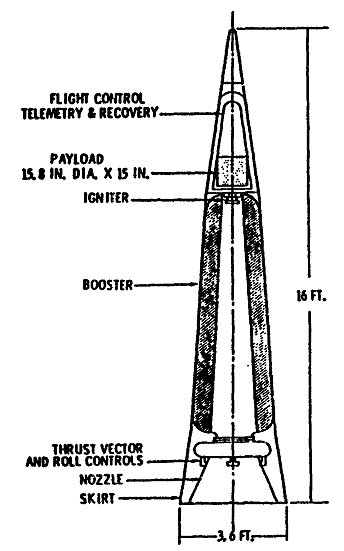
Construction of TRADEX and associated PRESS facilities began at Roi-Namur in early 1961.33 TRADEX incorporated a new high-power L-band transmitter tube developed 4 under ARPA sponsorship. In April 1962, TRADEX began operations by RCA, and shortly afterwards Lincoln personnel arrived to take over. In June of that year, TRADEX successfully tracked the first Air Force ICBM reentry event at Kwajalein, along with the NIKE ZEUS radars. In July 1962 the first successful NIKE ZEUS intercept of an ICBM occurred at Kwajalein. TRADEX (see Figure. 1-2) was the first and only dedicated measurements radar at Kwajalein till 1968, and after many successive upgrades, remains in use to date.34
Between 1960 and 1962, apparently, the level of activity at Lincoln associated with PRESS was not high.33. Shortly after Lincoln staff arrived at Roi-Namur, ICBMs began to arrive and much data began to be gathered on reentry phenomena. The PRESS capabilities at Roi Namur were soon augmented to include an optical telescope and a Baker-Nunn open slit spectrograph, similar to those that had been used at Wallops Island, and the WSMR, and also other optical and infrared systems. Optical and IR instruments on existing aircraft were also improved, and another aircraft was specially outfitted for PRESS.36 Data analysis done initially at Roi Namur was found to be difficult to manage there because of the time required and complexity of preparing for the frequent reentry events. As a result, data packages were soon air mailed back to Lincoln for analysis.
The optical and IR sensors in the PRESS aircraft after some initial difficulty eventually were directed successfully using TRADEX. The optical results were particularly valuable for investigation of emissions associated with chemical phenomena in wakes, which were especially complex from ablating RVs.
The scientific data from PRESS, along with some from the parallel BTL Range Measurements Program (RMP), were reviewed in monthly meetings starting in early 1959 and a little later presented, along with relevant analyses, in the ARPA-sponsored AMRAC symposia. Many different types of RV targets were observed. A synergism developed rapidly using results of the laboratory and theoretical efforts on reentry phenomena together with the field results.37 Some of the NIKE ZEUS radars, which initially had modest coherent capability, eventually increased coherence bandwidth partly as a result of TRADEX's performance.31
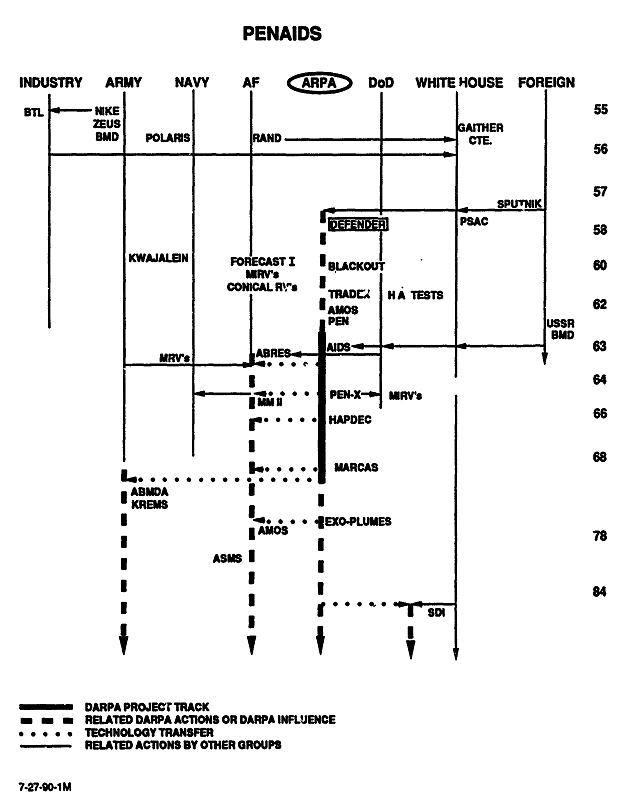
Beginning in 1962 when concern rose about the potential of Soviet BMD systems, the Air Force began a major effort on penetration aids, initially with ARPA funding, and the Navy's plans for POLARIS included multiple reentry vehicles (MRVs).39 Later (in 1963) the Air Force was given the assignment of coordinating U.S. penetration aids efforts under project ABRES.40 ARPA funding of a program dedicated to R&D on "Penaids" continued through 1966, and thereafter on a more opportunistic basis. In 1965 ARPA also funded the "Pen X" study, which reviewed the problem of Penaids versus multiple independent reentry vehicles (MRVs). Pen X provided some input to the DoD decisions to deploy MIRVs. However, this decision seems to have been primarily due to simple economic considerations related to missile costs.41
As mentioned above there was an early appreciation of the need to thoroughly understand both offensive and defensive systems' capabilities in order to make decisions on the balance required for cost-effective national security. The key question for the defense was whether some practically useful discrimination phenomenon or combination of phenomena existed to lessen the defense's burden of identifying RVs in time to be able to launch and guide a missile to destroy it. The offensive (penetration) side of the same problem was the search for ways to minimize or mask the RVs observables for some critical length of time, and the key question was how many, how heavy and large penetration aids, which displaced destructive warhead payload, would be cost effective. While the Army and Air Force had opposite sides of this problem, ARPA was set up to be able to work both sides, and indeed PRESS was set up to make accurate qualitative measurements of the same phenomena which affected both sides. Not long after PRESS was underway, DDR&E sponsored regular meetings involving offensive and defensive sides with Lincoln and ARPA as active participants and "honest brokers." Key to being able to do this, of course, was DDR&E H. York's 1960 decision to force both Services to use the same reentry site at Kwajalein, and in ARPA's setting up the PRESS operation there to provide high quality scientific information to both sides (defensive and offensive), as well as enabling independent analyses be done by and through ARPA.
Before the end of 1962, President Kennedy made the decision, after many studies and debates, not to deploy NIKE ZEUS because of the apparent vulnerability of NIKE ZEUS to simple countermeasures.42 It is not clear what part, if any, PRESS had in this decision. Not many reentry measurements had yet been made by PRESS and apparently few penetration aids of any sophistication had been tested.43 The BTL history of BMD states that the decision was due to a change in the threat from one-on-one engagements (a single NIKE ZEUS installation could only handle one RV/missile at a time) to a high traffic threat, involving simultaneously many RVs and many interceptors. Multiplication of individual NIKE ZEUS type systems to meet this new threat was not considered cost effective.44 Other considerations involved were: the fact that the ZEUS missile speed required launch before "atmospheric filtering" of RVs from lighter decoys, debris, craft, etc., could take place; the reality of the Soviet penetration aids threat for U.S. BMD, which remained a matter of contention throughout the BMD project;45 and the vulnerability to nuclear blasts of the mechanically steered NIKE ZEUS radars. After the President's decision, NIKE ZEUS continued through 1962, making successful intercepts of several types of ICBMs, and the BTL target tracking and discrimination radars continued to make reentry measurements for several years.
While cancelling NIKE ZEUS, the administration also gave its backing to continued ABM R&D, specifically along the lines of a concept called NIKE X, involving a hardened phased array radar and a high acceleration missile to make close-in intercept after atmospheric screening-out of light decoys and other debris. The name NIKE X was apparently due to Dr. J. Ruina, then ARPA director, who had the task of laying out the options for DoD and the President's Science Advisory Committee (PSAC).46 BTL describes NIKE X as a transition R&D phase toward the next generation BMD system. Apparently from about 1960 a high acceleration missile had been under study at BTL and a phased array also, after the stimulation of ARPA's successful ESAR project and an explicit request by DoD.47
In early 1963, apparently prompted in part by intelligence about Soviet ABM developments, as well as about their prospective offensive capabilities, the Secretary of Defense ordered the priority development of NIKE X. The NIKE program by then had begun construction at WSMR of a hardened phased array radar, the MAR,48 and of a short range high velocity missile (SPRINT); in 1964 the program incorporated a thermonuclear warhead, on a longer range version of the ZEUS missile (SPARTAN)49 for exoatmospheric X-ray kill of RVs, providing a kind of area defense.
The fact that SPRINT and SPARTAN had nuclear warheads emphasized the importance of understanding the characteristics of ABM systems operation under conditions in which nuclear explosions occurred in and above the atmosphere. Many then felt that the theoretical assessment of such situations should have been compared with dedicated experiments involving real nuclear explosions. However, with the atmospheric nuclear test ban, no further experiments occurred.30 ARPA funded several related experiments connected with the FISHBOWL nuclear test series in 1962, and some of the data analysis.51
As part of NIKE X, in 1964 BTL intensified its own reentry measurements and analysis program.52 Overall reentry test requirements, in the mid 1960s, began to be coordinated in a tri-Service coordinating group and an ARPA-Army agreement was established specifically to coordinate the RV measurements program.53 The respective responsibilities, described from the viewpoint of BTL, were as follows:54
1. Bell Laboratories. Specified program objectives, reentry hardware performance requirements, and target delivery (trajectory and deployment) requirements. Operated the NIKE radar sensors and EC121 optical aircraft Reduced and analyzed collected data.
2. Army. Procured target vehicles and delivery systems through the Air Force. Coordinated test requirements, program objectives, and schedules. Provided the Kwajalein Test Range support Coordinated inter-Service data exchanges.
3. Air Force. Provided the reentry hardware, booster systems, and the ETR (Reentry Test Range) facilities (i.e., delivered targets to Kwajalein Test Site). Exchanged technical data and coordinated their reentry study program, ABRES, to support missions of mutual interest
4. Lincoln Laboratory. Supplied technical consultation and coordinated design of reentry experiments and data analysis exchange. Operated additional sensors (data sources) of the PRESS facilities at KTS.
In the early 1960s intelligence about a Soviet ABM radar, and an appreciation that penetration aids were as yet used in very few of the U.S. ICBMs, suggested a specific need to better understand reentry phenomenology as observed by radars operating in the VHF frequency range.55 This led to Lincoln design, about 1964 of a new, higher power radar with dual frequency capability, at VHF and UHF, called ALTAR (ARPA Long Range Tracking and Instrumentation Radar) as the next major PRESS sensor at Roi-Namur (see Figure 1-2). The primary motif for ALTAIR apparently was to simulate the Soviet BMD radars' capabilities against U.S. RVs.56 It was also considered important to obtain accurate experimental data on reentry phenomena at different frequencies, even if some of them were low enough to be significantly affected by nuclear explosions. Before ALTAIR was built, however, TRADEX was modified to provide some interim VHF observational data. Like TRADEX, the construction of ALTAIR was funded separately.57 ALTAIR became operational about 1969.
Shortly after commencing work on ALTAIR, Lincoln proposed that a large bandwidth, high resolution C-band radar [ALCOR (ARPA - Lincoln C-band observable radar)] be constructed. (See Figure 1-2.) TRADEX and other data had indicated that high resolution images of RVs and of the structure of their wakes might be very important To obtain very high resolution, a wider bandwidth (500 MHz) and a higher radar frequency were required than provided by TRADEX and ALTAIR.58 Like TRADEX, ALTAIR and ALCOR (and the later millimeter wave radar), as experimentally oriented systems, were mechanically steered, not having the multiple-target BMD problems which required a phased array. ALCOR became operational about 1970 at Roi-Namur.
Figure 1-3 outlines the history of upgrades of radars originating in PRESS, up to 1980. In the mid 1960s a wide bandwidth, similar to ALCOR's, was included in the ARPA Synthetic Spectrum Radar, built by Westinghouse and used in SOI studies and in the design studies of ADAR (Advanced Array Radar), for hardened site defense systems with capabilities beyond that then planned for NIKE X.59
Throughout this period (early to mid-1960s) there were a large number of ICBM and SLBM tests involving different types of RVs and penetration aids. Some of these were of special design for the ABM projects, and some RVs carried instruments to make special measurements on board to determine the properties of plasma sheaths and wakes. A number of experiments, with ATHENA intermediate-range missiles and special RVs were also conducted in the mid-1960s at WSMR.60 The WSMR radars used for these experiments included BTL's NIKE ZEUS and MAR radar, and ARPA's AMRAD measurements radar, operated at first by the Columbia University electronics laboratory group, (later the Riverside Research Institute) and eventually turned over to Lincoln. The WSMR measurements, lacking real ICBMs, but under somewhat better control, and often allowing a closer comparison with laboratory reentry physics experiments, were a valuable complement to those at Kwajalein and Roi Namur. These WSMR activities continued to the mid-1970s.
In the late 1960s several summary studies were conducted to assess the state of understanding of reentry phenomenology and its applicability to NIKE X.61 While these and other similar studies underlined the continuing difficulty of discrimination problems, at the same time they apparently indicated a sufficient level of capability of a NIKE-X type system against a presumed unsophisticated penetration-aids threat from China to help persuade DoD in 1967 to propose deployment of a "thin" BMD system, called SENTINEL.
In 1967, at about the same time as the SENTINEL decision, the major pan of project DEFENDER was transferred from ARPA to the Army, along with some key personnel and the PRESS facilities.62 Dr. J. Foster, then DDR&E, directed the transfer, noting that DEFENDER'S objectives had been largely reached, and that the Kwajalein facilities, including PRESS, should be regarded as national assets. In response the then Army Chief of R&D, Gen. A. Betts, who had been an earlier ARPA director, reorganized his command to identify clearly its ABM-related R&D effort in an Advanced Technology Program of which the ex-ARPA personnel were now in charge. As specified by the DDR&E, the Army continued Lincoln's management of PRESS in support of ABM R&D and the Air Force's ABRES project The PRESS facility was renamed the Kiernan Reentry Measurements Facility (KREMS) after LtCol Joseph Kiernan, who had managed the ARPA PRESS program from 1963 to 1966 and was killed in Vietnam.63
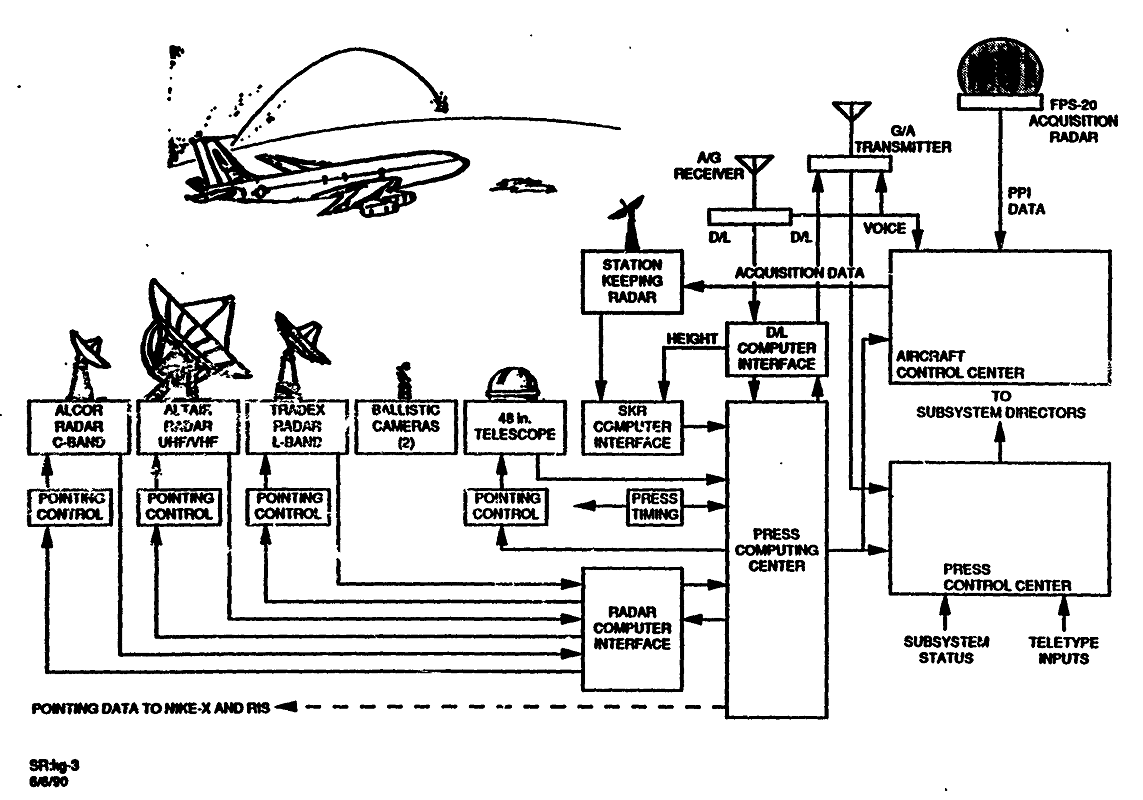
In summer 1968 an ad hoc committee, including representatives from ARPA, cognizant Army agencies, DDR&E, and the major contractors BTL and Lincoln, developed a coordinated plan for continued use of some of the Kwajalein radars and retirement of others, which was then approved by the DDR&E reentry programs review group overseeing the transfer and subsequent actions. In fall 1968 the same committee devised plans for integration of these sensors, providing a measure of independence along with improved communications by which the radars would provide data to each other and to an upgraded central data processing system. Previous to this, apparently, BTL had set up a high-capacity data link between PRESS and their NIKE X radars.64 In the 1967-72 period, there was very close collaboration of the Lincoln and BTL groups not only on reentry measurements, but also on system-related activity, such as determining miss distance of the SPRINT and the SPARTAN intercept events.63 Figure 1-4 depicts the complex PRESS facilities in 1969.
By the early 1970s considerable confidence was expressed in the ability to successfully model reentry phenomena, based on PRESS and related data, and when integrated with the laboratory and theoretical work on reentry physics under DEFENDER.66 Because of the progressively higher cost of reentry tests there was (and is) a major economic payoff to a successful reentry modelling effort However, there were also qualifications to such statements as they related to defensive discrimination.67 The BTL history also expresses some skepticism about the then current theoretical extrapolations, and some frustration due to the lack of threat radar signature data available to them to design their SAFEGUARD system.68
After the transfer of most of DEFENDER, ARPA formed its Strategic Technology Office (STO) which continued to support optical and IR research using the PRESS aircraft, until the early 1970s.69 This research provided much of the the basis for sensor developments later undertaken by SDL The PRESS ground-based optical and IR systems went to KREMS, and operated until 1972 with some changes. The Army began to install a new generation of ground-based optical instrumentation, emphasizing IR and active laser systems at KREMS in 1973. The TRADEX Optical Adjunct (TOAD), an optical telescope boresighted with TRADEX and featuring a CCD focal plane array, was installed in about 1980. TOAD images RVs against a star background, enabling highly accurate angular measurements.70 The AOA (Airborne Optical Adjunct) work under SDI has also revived interest in the possibilities of direct use of aircraft as sensor platforms for BMD systems.
Figure 1-5 outlines the history of the PRESS and KREMS optical systems to 1980. Figure 1-5 also shows the current KREMS instrumentation system, including a local-area network intercomputer communication system. In the early 1970s ALTAIR was modified to simulate the SENTINEL-SAFEGUARD system's PAR radar, since the PAR, then being constructed near Grand Forks, S.D., could not observe any test reentries. In the mid-1970s the Air Force expressed a need for a radar sensor in approximately the Kwajalein geographic location for their SPADATS system, in order to deal with launches of satellites from the USSR or China. ALTAIR demonstrated related capabilities in the late 1970s and was modified soon afterwards for both low altitude and deep space satellite observations. In 1981 ALTAIR began SPADATS operations on a round-the-clock basis.71 TRADEX, operating in a new pulse-compression mode, also backs up ALTAIR for spacetrack capabilities. TRADEX also serves as an illuminator for the new precision, multistatic reentry tracking system at KREMS.72
In the mid-1970s, the Army's SAFEGUARD program was terminated. However, a Hard Site Defense System, oriented to defense of ballistic missile launch sites was later designed and, in part, constructed and tested by the Army at the Kwajalein test site.
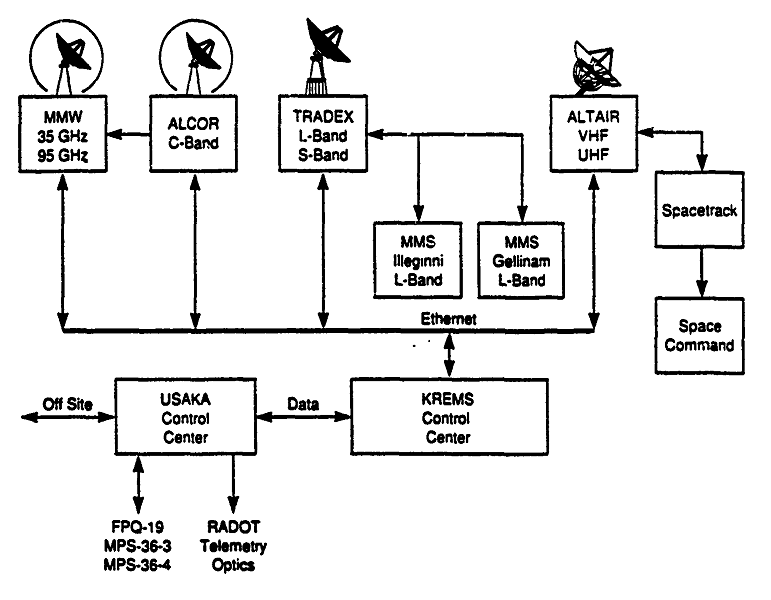
ALCOR has now been upgraded to routinely generate two-dimensional images of objects in orbit, in support of the Air Force's SOI (Space Orbit Identification) activities. Its bandwidth also allowed it to track beacons in RVs. A Lincoln-designed millimeter wave radar, to achieve higher resolution, is the latest addition to KREMS.
KREMS is now the major part of the national R&D facility, operated by the Army's Strategic Defense command, and serving all Service and SDI needs for measurements of RVs and BMD. A particularly good, if somewhat dated, description of its value and activities was given by the Army BMD commander in 1979.73
The BMD Program Manager is also responsible for the operation of Kwajalein Missile Range (KMR), a national range. KMR is not dedicated solely to the support of BMD; it is the major test range for our strategic missile force, offensive and defensive. KMR is unique in two major respects; first the unique quality of the data collected by its highly accurate sensors is essential to the successful development of the new generations of strategic offensive missiles (e.g., MX and TRIDENT II) and second, it provides unique opportunities for coordination, and cooperation between the offensive and defensive technical communities. Virtually all ICBMs fired into KMR serve both the offensive and defensive communities for data collection.
Major fiscal year 1980 test programs at KMR include:
The Advanced Ballistic Reentry Systems (ABRES) test of RV material characteristics, penetration aids, arming and fuzing technology, and maneuvering RV design.
The Minuteman development tests of Special Test Missiles and Production Verification Missiles to evaluate modifications and improvements to the Air Force reentry systems.
The Strategic Air Command (SAC) tests of Minuteman II and III missiles into KMR to provide training for SAC crews and evaluation of weapon system performance. Selected test vehicles have additional data requirements in support of offensive system development objectives.
The BMD Advanced Technology Center Detection, Designation and Discrimination Program, which utilizes the Kiernan Reentry Measurement Site radars (Tradex, Altair and Alcor) to provide the primary source of techniques.
The Systems Technology Test Facility on Meck Island to support evaluation of BMD components for potential application to future BMD systems.
An evaluation of the effectiveness of the ALTAIR radar to meet Air Force Aerospace Defense Command requirements for collecting data was successfully completed in fiscal year 1978. Full time support of ADC requirements is under consideration at this time.
Range planning for the following future testing will be accomplished in fiscal year 1980.
Homing Overlay Experiment tracking scenarios. Interceptor Technology Tested Program.
Tracking analysis and miss distance measurement techniques for Space Defense Program.
Testing to examine the technology required for non-nuclear kill of reentry vehicles.
The importance of KMR to the success of these and other test programs cannot be overemphasized. The U.S. possesses no comparable capability to collect exo-atmospheric signature data, record missile reentry phenomena, provide terminal trajectory and impact data, record missile reentry phenomena, provide terminal trajectory and impact data, recover reentry vehicles when required, and transmit near real-time data to the mission sponsors. The instrumentation required is extensive; moreover, the data provided by these instruments must be of the highest quality. High confidence in our test data leads to high confidence in our missile development programs and ultimately in our operational capabilities.
The collection of our offensive and defensive test activities at KMR is particularly beneficial. In the process of testing our offensive systems, the BMD Program takes full advantage of the opportunity to test new BMD technologies and components against the most sophisticated targets available. The result is the mutual accomplishment of test objectives with a minimum of missile firings and a continuous interchange of data between our offensive and defensive development programs.
Recent steps to further upgrade KREMS for SDI are described in a recent issue of the Lincoln Laboratory Journal,14 and of IEEE's Spectrum.15 The SDI plans for the Kwajalein site also include a supercomputer for range control, and construction of a new generation phased array radar (GBR-X or GSTS) for early acquisition, tracking and discrimination of RVs, and guidance of exo- and endo-atmospheric, interceptors on the site of one of the radar foundations built by BTL in the early 1970s. Incorporating solid state technology, GBR-X is to operate in the microwave frequency range, desired in the late 1950s but then considered economically impractical.
DEFENDER had the objective of doing advanced research relating to BMD and its penetration. A "map" of needed R&D had been provided by earlier studies, and an efficient start for ARPA's work was due in part to the fact that some of the participants in these studies were key players in the early DEFENDER project It was clear from the beginning of DEFENDER that field measurements of ICBM reentry would play a major, if not decisive, role for decisions about the continued credibility of the U.S. deterrent against Soviet ABM efforts, and about the practicality of a U.S. BMD deployment PRESS was the ARPA response to the need to do this kind of high quality measurements. PRESS began as an ARPA initiative, but the continuing participation of a major high quality nonprofit laboratory was a very important factor because of the complexity of the measurements and the key role that these measurements would play. Lincoln at this time was "available" because its BMEWS job was done, but was reluctant at first due to the politics involved in being an Air Force contractor.
A key decision was made by H York as DDR&E to combine assets, the Air Force ICBM shots and the Army's ABM R&D efforts, at Kwajalein atoll. ARPA made a similar key decision to take advantage of this combination, which would mean that the measurements made by the PRESS sensors could be provided equally to the offensive and defensive side.
The early ARPA measurements of reentry made before PRESS primarily with the DAMP ship indicated that discrimination of RVs was difficult and helped toward the national decision not to deploy ZEUS. However, the major factor in this decision was probably the NIKE ZEUS inability to handle multiple RVs. NIKE X was the follow-on option recommended by Dr. J. Ruina, then ARPA director, and assumed that atmospheric filtering could play a key role in simplifying the discrimination problem, at the expense of compressing the time available for action, and so requiring a very high acceleration missile. This early judgement was proved correct by subsequent intensive measurements made by PRESS, and also by BTL. The TRADEX radar and the correlated optical and IR measurement systems were the "workhorse" of this period. BTL recognized the value of the PRESS data and used it for their BMD systems effort. An increase in bandwidth of the NIKE ZEUS target tracking radar (TTR) was partly paid for by ARPA, and there seems to have been some impact of the coherent PRESS radar data on the NIKE X system design. PRESS data also influenced the ADAR effort under DEFENDER, which in turn influenced the later Army BMD system designs.
From about the time of the NIKE X decision, the priority of the PRESS effort seems to have been on the offensive, penetration problem. ALTAIR, the second PRESS radar, was originally designed to mimic the Soviet ABM radars. ALCOR, on the other hand, seems to have been designed largely to explore the possibilities the highest practicable resolution instrument could offer for BMD discrimination. Both ALTAIR and ALCOR were begun under ARPA, but were not used until after the transfer of DEFENDER. The value of TRADEX, ALTAIR, and ALCOR is indicated by their continued use today. These systems, upgraded in several ways and linked in a computer network, are the core of the National Kwajalein Test Site (KTS) facility and now part of the Army's Advanced Technology Center, and are used by the Air Force as part of their operational SPADATS systems and for SOI.
Optical sensors, after receiving initial emphasis, seem to have been relegated to a secondary role during the PRESS period. However, the PRESS optical (and IR) sensor systems did not all go to the Army in the DEFENDER transfer. ARPA, STO, kept the airborne sensors optical development and measurements, as well as the AMOS facility, looking to the future possibilities of exoatmospheric discrimination from an elevated platform. These possibilities have been followed up in later Army and SDI programs.
The transfer of DEFENDER seems to have been a "top down" decision of Dr. J. Foster, then DDR&E, in view of the DoD decision to deploy "the best available BMD system" and the subsidence of inter-Service rivalry over the years. By the time of transfer the objectives of "keeping both offensive and defensive sides honest," setting up a high quality scientific effort in the area, and acting as competition to improve the quality of the Army work had been accomplished. Key tools to carry out further research were in place. These tools included modeling, which integrated theory and laboratory reentry physics with PRESS results, to allow more cost-effective design of expensive reentry tests, and to lend assurance to the major decisions about deployment of BMD.76 Despite these accomplishments, apparently there were some strong feelings, at the time of DEFENDER'S transfer, that there was considerable research yet to do and that ARPA should have remained in charge.77 Some of this research was continued under ARPA's STO, transferred in the early 1980s to the SDI R&D program.
ARPA expenditures for PRESS from project records are about $200 million. The Army and SDI have spent nearly $1 billion in subsequent R&D and upgrading efforts at the KREMS follow-on facility at Roi-Namur. The Air Force had spent over $1 billion on penetration aids by 1970. Typical complex reentry tests now cost over $100 million each. It is difficult to estimate the savings due to the ability to reduce the numbers of ICBM tests required, the negative decisions not to deploy a BMD system, and to put a dollar figure on the positive credibility assurance provided to our deterrent systems.
1 High-level studies of the feasibility of what were eventually called "penetration aids" included those conducted under the Gaither Committee (in 1957) and, a little later, by the DoD Reentry Body Identification Group and by a special panel of PSAC. Many of the same people participated in all these studies, which were chaired by W. Bradley, who later joined and IDA'S ARPA Support Group. "The ABM Debate," by ER. Jayne. MIT thesis, 1969, p. 452, and H. York, "Multiple Warhead Missiles," in Scientific American, Vol 29, Nov. 1973, p. 2004. Earlier Service Studies went back to the early 1950s.
2 According to Gen. Goodpaster, Special Assistant to President Eisenhower, this was the president's primary motif in establishing ARPA. Discussion with Gen. Goodpaster, 4/88.
3 Hearings before Defense Subcommittee on Defense Appropriations, for 1959 85th Congress, 2nd session, statement of R. Johnson, p. 292.
4 DoD directive 512933, Dec 30,1959.
5 R. Johnson, op. cit. pp. 320 and 338. ARPA was also given the Air Force's 117L Satellite Program, which it returned, modified, to the Air Force. The Air Force and Navy ballistic missile efforts, less controversial, were not given to ARPA.
6 H. Yak, Does Strategic Defense Breed Offense, Harvard University Press, 1986, p. 13.
7 ARPA funded some of the field experiments in the Pacific Nuclear tests in 1958 and 1962.
8. A.O.'s 5 of 4/58, and 6 of 6/58, included many efforts following up on the Bradley recommendations in such scenarios. Cf. also Richard J. Barber Associates, History of the Advanced Research Projects Agency, 1958-1975, NHS 1975. p. ID-55.
9 Some work in these areas had been going on since the mid-1950s.
10 DAMP, RCA brochure (UNCLASSIFIED) 1960. By 1961 DAMP included a data measurement analysis laboratory at Moorestown, NJ. Early funding was provided by A.O.'s 51 of 12/58 and 127 of 1/60; also discussion with A. Rubenstein, IDA 12/87.
11 ARPA BMD Technology Program Review. IDA-ARPA TR 59-8. Aug. 1959 (declassified), p. 13.
12 A review of radar measurements and facilities to August 1960 was given by R. Leadabrand of SRI and of IR and Optical Measurements by M. Nagel of AFCRL, in an ARPA review of project DEFENDER for the DDR&E, Aug. 1960 (declassified).
13 Richard J. Barber Associates op. cit p III-55. This first approach to Lincoln was apparently made in May 1958. Earlier, Lincoln had finished R&D for design of the BMEWS radar system for the Air Force and did not yet have another major project to replace it.
14 J.S. Shortal, A New Dimension: Wallops Island Test Range, the First 15 Years, NASA Reference, publication 1028, Dec. 1978, p. 538; and discussion with L. Sullivan, Lincoln Labs, 12/89.
15 A. Rubenstein, discussion op. cit. Earlier shipboard observations had been made by the Army's Operation GASLIGHT, cf.. "Missiles & Rockets," July 14,1958, p. 14.
16 E.g., A.O.114 of 11/59.
17 A.O .236 of 6/61 provided explicitly for BAMIRAC. Earlier related efforts and the AMRAC meetings had been funded by ARPA in 1959 under A.O.'s 6 and 30.
18 ABM Project History, Bell Telephone Laboratories, Oct 1975, pp. 1-32,1-46, and 1-50.
19 Part of the original ARPA motif was to help "backfit," if possible, improvements into NIKE ZEUS, cf. testimony of H. York in DoD Appropriations Hearing for FY1959, House of Representatives, 85th Congress, 2nd Session, p. 257.
20 BTL states, however, that nuclear effects were not considered in the design of NIKE ZEUS, not having been specified by the Army. BTL, op. cit., p. M9.
21 An ARPA-supported comprehensive study of "blackout" by IDA in 1965, using this data, decisively affected the choice of frequencies of NIKE X. See, e.g., BTL History, op. cit., p. 1-44.
22 "KREMS, The History of the Kiernan Reentry Measurements Site," by M.D. Holtcamp, U.S. Army BMDSC, Huntsville, 1980, p. 18. The "loan" was typical for the ARPA's IDA support staff at the time.
23 A. Grobecker, ARPA, 1959, BMD Technology Program Review, op. cit., p. 99.
24 A.O. 49 of 12/58. TRADEX ($38.5 million).
25 SAMSO Chronology, 1954-79, Air Force Systems Command Space Division, Chief of Staff, History Office. 1980. pp 52 and 59.
26 G. Kistiakowsky, A Scientist at the White House, Harvard 1977, p. 319.323. and 327.
27 H. York, Making Weapons, Talking Peace, Basic Books, 1987, p. 177-8. Somewhat later, however, some (Air Force) IRBM shots from Johnson did occur in the Kwajalein area.
28 Unsuccessful attempts were made to locate PRESS facilities in the island of Kwajalein itself. AO 110 of 10/59, Project Press Roi Namur Facility, also AO 121 of 12/59.
29 Apparently there was also a delay of about 1 year between the decision to go ahead with TRADEX and the decision of its frequency band. The first recommendation for TRADEX, Nov. 1958, was for UHF, despite the nuclear effects data from HARDTACK, which showed significant absorption at UHF. L-band was eventually added to UHF for the first version of TRADEX. A. Grobecker, IDA TE 184, Oct 1959 (CLASSIFIED).
30 E. Michael Papa, Historical Chronology of the Electronics System Division (ESD), 1947-86 History Office, Air Force ESD. Hanscom AFB, Bedford, MA, Oct 1987, p. 6.
31 Computer control has taken place gradually, cf. Hohcamp, op. cit, p. 72, and discussion with Gen. K. Cooper (Ret), 6/90.
32 Also, there was dissatisfaction in ARPA with the rate of progress on PINCUSHION. Discussion with 4 A. Rubenstein, 5/90.
33 Holicamp, op. cit., p. 32,
34 TRADEX current specifications are given in K, Roth, et al, "The Kiernan Reentry Measurements System at Kwajalein AFB," Lincoln Laboratory Journal, Summer 1989, Vol. 2, No. 2, p. 255.
33 Discussion with Dr. M. Baiser, 9/89. Lincoln work related on reentry physics, however, was substantial at the time. Cf., e.g., C. McLain, "A Study on General Recommendations for Experimental Held Measurements," Project DEFENDER, May 1961 (UNCLASSIFIED).
36 A.O.127 of 1/60. "PRESS Aircraft"
37 C. McLain Op. Cit.
31 This apparently took place after the cancellation of NIKE ZEUS, in 1963. when the BTL RMP program was expanded in support of NIKE X. BTL, op. cit. p. 1-41. It was paid for in part by ARPA. A.O.702 of 3/65. "Modification of NIKE TTR."
39 Apparently, about $1 billion was spent for penetration aids, etc., between 1962-68. Cf., A.C. Enthoven and W.K. Smith. How Much is Enough, Harper. 1972. p. 190.
40 About this time ARPA also conducted a comprehensive study in this area for WSEG. PENAIDS are discussed more fully in Chapter IV of this volume.
41 Apparently the inspiration for Pen X came from the then Assistant DDR&E for Defensive Systems, Dan Fink. Discussion with BGen R. Duffy (Ret). 3/90. The MIRV economics is discussed in All in a Life Time, by I. Getting, Vantage Books, 1989, p. 479.
42 Jayne, op. cit., p. 173.
43 Jayne, op. cit., and p. 185. See also "Strategic Warfare." by Daniel J. Fink, Science and Technology, Oct 1968, p. 64. Several RVs had been tested, but penetration aids, such as low observability, required tradeoffs. High "Beta" RVs were assumed to have low-observable geometry. The first ABRES flight test apparently took place on the AMR in 1963. Cf., SAMSO chronology, ibid., p. 120. The available data from DAMP, PRESS and BTL were reviewed in the IDA Intercept X Study, in 1962, which provided some input to the NIKE ZEUS decision.
44 BTL, op. cit, p. 2-15. Until about 1964, penetration aids were apparently mainly "on paper." D. Fink, op. cit
45 BTL, op. cit, p. 3-7.
46 Ruina had previously been assistant to DDR&E for Air and Missile Defense. His briefing on NIKE X was given to PSAC and apparently to the President directly, Jane's, op. ciL, p. 179.
47 BTL, op. cit, p. 2-1, and J. Ruina, op. cit
48 Cf. Chapter VI of Vol 1 of this study
49 BTL, op. cit, p. 10-1.
50 Apparently Sec. of Defense McNamara had argued against ABM deployment partly due to the absence of such data, but a while later argued for a test ban on the grounds that the uncertainty did not outweigh the general advantages of a test ban. Later ABM deployments, it was agreed, would involve radar frequencies which could "see through," and a distribution of radars which could "see around" the nuclear effects.
51 AO 310 of 2/62, STARFISH
52 BTL, op. cit., p. 2-15.
53 AO 648 of 12/64, ARPA-Army Agreement on RV Measurements Programs.
54 BTL, op. cit.
55 Jane's, op. cit., p. 257. The NIKE ZEUS and NIKE X radars did not operate at VHF. However, apparently driven by considerations of practicality and cost of high power tubes, for a while there was serious consideration of VHF for the later U.S. BMD systems. BTL History, op. cit, p. 8-10.
56 Hottcamp, op. cit, p. 73.
57 AO. 668 of 2/65, PRESS UHF/VHF Radar.
58 There were earlier ARPA efforts to explore approaches to a wide bandwidth synthetic spectrum radar (AO 145 of 5/60). Cornell Aero Labs., a BTL subcontractor, had also pointed out the value of short pulse lengths. Lincoln later upgraded the bandwidth of its HAYSTACK radar to improve its SOI (Space Object Identification) imaging capability.
59 The ADAR studies began under the blanket AO 498, of 7/63 to Lincoln, for "discrimination studies " Other aspects of the ARPA hard point defense concept included the HAPDAR low cost, hardened phased array radar, and the HIBEX missile. See Chapter III. of this volume.
60 Cf„ AO 254 of 8/16 and AO 379 of 6/62.
61 See e.g. "BMD Discrimination Study," IDA/IASON Study S-298 (CLASSIFIED) 1966. At about the same time, the Pen X and other studies of the utility of penetration aids versus MIRVs were made, favoring the latter.
62 Cf. Hollcamp, op. dt, p. 44-5, and Richard J. Barber, History, op. cit. pp. VII-11, VII-38 and Vm-29.
63 The renaming of the facility was also due to Gen. Betts, Holtcamp, op. ciL, p. 46. Apparently Lincoln also had an internal debate about this time as to whether continued PRESS-type responsibility was compatible with the laboratory's research mission. M. Baiser, op. cit.
64 "Ballistic Missile Defense Testing in the Pacific: 1960-1976," by CA. Warren, Bell Laboratories Record, 1977, p. 204.
65 Cf., e.g., "Radar Reentry Data," by L. Rechtin (Lincoln) and T. Philips (BTL) in Journal of Defense Research, VoL 2B, 3,1970, p. 85 (CLASSIFIED), and (regarding SPARTAN) BTL History, op. cit. p. 5-37.
66 Cf., e.g„ CE McLain, "State of the Art of Reentry Physics," Journal of Defense Research, Vol 2A, No. 1,1970, p. 2. (CLASSIFIED), and Richard J. Barber, History, quoting Dr. C. Herzfeld.
67 McClain, op. cit, p. 5.
68 BTL History, op. cit, Chapter III-7, states that the necessary intelligence information could have been gathered, but wasn't.
69 Holtcamp, op. cit., p. 79.
70 Ibid.
71 Lincoln Laboratory Journal, op. cit., p. 259.
72 Ibid, p. 262.
73 Testimony of MG Stewart C. Meyer, Defense Authorization Hearing for FY 1980, 96th Congress, 1st Session, pp. 314-15.
74 Lincoln Laboratory Journal, op. cit
75 "Kwajalein's New Role; Radar for SDI," by Glenn Zorpeue, IEEE Spectrum, March 1989, p. 64. This article also outlines some of the current operations at KTS.
76 These tests, currently, can require several years preparation and intensive rehearsals, costing over $100 million each, cf., Lincoln Laboratory Journal, op. cit., p. 252.
77 These feelings are described in Richard J. Barber, op. cit., pp. VII-11-12.
The ARECIBO 1,000-foot antenna of Cornell University's National Astronomical and Ionosphere Center is the largest in the world. Built in 1959-63 with ARPA support, and transferred to the National Science Foundation in 1969, the ARECIBO facility has assisted NASA in selection of suitable locations for the APOLLO lunar landings and the Viking planetary mission, and has made many notable contributions to radar and radio astronomy, ionospheric physics, and to the aeronomy and dynamics of the earth's upper atmosphere. Continually upgraded, ARECIBO remains in many ways the world's most sensitive instrument for radio and radar astronomy and ionospheric radio physics, and is currently in round-the-clock use for research.
In the early 1950s research on tropospheric and ionospheric scatter communication by the Services led eventually to development and fielding of several military communication systems. Extension of the line of thought of this research also led W.E. Gordon of Cornell University to consider the possibility of directly scattering radio waves from the individual electrons in the ionosphere. Because of the extremely small scattering cross-section of a single electron (derived in the 1920s by J. J. Thomson), Gordon quickly came to the conclusion that a large antenna, about 1,000 feet in diameter, would be required for a useful system using this approach. [1] This was larger than could be expected to be practical for a communication system in most locations. However, a single such antenna as part of a radar system appeared to open a new range of possibilities for detailed exploration of the structure and dynamics of the ionosphere. It was not long after Gordon's first publication [2] that an actual detection of the incoherent or Thomson scatter from the ionosphere was achieved by the Bureau of Standards. [3]
The radio physics research possibilities, and the challenges of finding a suitable location and of designing and building a 1,000-foot antenna strongly intrigued several members of the Cornell faculties of geology, engineering, and physics. Much of this preliminary work at Cornell was funded by ONR's electronics branch through an existing contract. [4]
In roughly the same time period, there were several other large antennas under construction or planned. The Naval Research Laboratory (NRL) had constructed a 200 x 234-foot parabolic section antenna in a ground depression for experiments on moon-bounce communication in the mid-1950s. [5] The success of these experiments encouraged NRL to propose construction of a 600-foot fully steerable dish to be located in a low radio noise environment at Sugar Grove, West Virginia. The largest fully steerable antenna at the time was the 250-foot dish at Jodrell Bank in the United Kingdom. While motivated primarily by exploration of the potential of moon-bounce signals, the NRL plans were to allow part-time access to the 600-foot antenna for radio astronomy research. Approvals for the SUGAR GROVE facility had been obtained by the time Cornell was formulating a proposal, and in late 1958 preliminary work on construction was underway. However, the scope of the project was expanded to include a radar capability under an accelerated schedule, and severe problems were encountered with the construction. The 600-foot dish project was cancelled in the early 1960s. [6]
Plans were also being formulated in the late 1950s by the National Science Foundation (NSF) for several large steerable antennas for its National Radio Astronomy Observatory to be located at Green Bank, West Virginia, not far from Sugar Grove because of the low radio noise expected there. [7] The NSF project also ran into construction problems with the first of these antennas while the Cornell proposal was being considered by ARPA. [8]
The Cornell group discussed the possibilities of a 1,000-foot dish with ARPA beginning in mid-1958. [10] The approach was to construct the antenna within a limestone "Karst" formation, a bowl-like depression, about 9 miles south of the town of Arecibo, Puerto Rico from which the facility took its name. This location was chosen partly because it was closest to Cornell of all sites considered eligible, and partly because its latitude was favorable for observing the planets. [11]
The proposal was assigned to project DEFENDER, which was concerned with phenomenology of missile flight, part of which would take place through the ionosphere. However, it was several months before ARPA took action on the proposal. In part this seems to have been due to an unfavorable climate caused by the difficulties being experienced at the time by the other big dish construction projects, the Navy's 600-foot steerable dish project at Sugar Grove, and with NSF's project at Green Bank. [12] Partly also the delay seems to have been due to arguments within ARPA over the degree of relevance for DEFENDER of the investigations proposed using the ARECIBO dish. [13]
ARPA finally responded positively to the Cornell proposal, first by AO 106 of 7/59 to undertake design and research planning studies and a little later with AO 122 of 12/59 for construction of a "1000-foot ionospheric probe." Apparently Dr. J. Ruina, then director of ARPA, felt that it was most important, at the time, to do good research in areas broadly related to DEFENDER, and that the Cornell proposal was a good example in point. [15] As DEFENDER developed, however, attention became concentrated on missile reentry phenomena below the ionosphere. This helped fuel continuing arguments about relevancy to ARPA mission, within ARPA and DoD, which apparently went on until the project was transferred to NSF in 1969. [16]
Construction of the initial open-wire mesh 1,000-foot dish took about 4 years. Relatively conservative bridge-type wire suspension technology was involved, yet a number of problems needed to be surmounted. The steel mesh was "fitted" into the depression, with provision for multipoint adjustments. Figure 2-1 shows a section through the planned structure, which involved suspending a carriage for the feeds from three concrete towers around the edge, together with an outline of initial specifications. A hole in the dish's center allows the feed-carriage to descend for repair. A control station at the dish's edge steers and turns the carriage. Building efficient line feeds of unprecedented size also proved difficult. A cooled parametric receiver was to be used, and provision was made for transmitting and receiving different polarizations. [17]
In November 1963 the facility was dedicated, about a year later than anticipated. The antenna's smoothness was determined by photogrammetry, and after a few months' adjustments the initially desired level of 1-inch average surface deviation, then considered compatible with uncontrollable motions of the feed carriage, was attained. [18] Figure 2-2 shows a photo of the antenna.
In early 1964 the "ARECIBO Ionosphere Observatory" began operations and revealed at once its unique capabilities due to the great resolution and gain of the antenna. A great deal of detail about the structure and dynamics of the ionosphere was quickly obtained. The data excited related activity on the part of plasma physicists, who recognized ARECIBO's possibilities as a precision instrument with which to test their theories, under conditions actually present in the ionosphere. However, "competition" was soon presented by the "topside sounder" satellites, which were actually the first to explore the upper ionosphere. The MILLSTONE HILL group were also very active in ionosphere investigations at this time. [19] As had been planned previously by the Cornell group, precise radar measurements were made of the distances to the moon and planets with results that have helped correct the orbital parameters for these astronomical objects, as well as the fundamental "astronomical unit." [20] Doppler returns gave information on the rotation of Venus and Mercury, and the smoothness and electromagnetic characteristics of the moon surface layers were determined with greater resolution (20 or 30 km) than ever before. [21] In the mid-1960s, systematic studies of lunar radar reflectivity began, which led to a NASA-supported project in the late 1960s to assist selection of a site for the lunar landings. [22] A number of new radio stars were also discovered and catalogued. After Pulsars had been discovered in 1968 in the United Kingdom, ARECIBO located the pulsar in the center of the Milky Way, which was considered to be an example of a "neutron star."
However, not many ARPA projects directly involved ARECIBO. Some of the early discussions, while the proposal was under consideration, involved some of the JASON group and others who were concerned with the structure of ionized missile wakes. [23] There were also some attempts to correlate ARECIBO data with measurements made for the ARPA OTH radar project. [24] After the cancellation of the Navy's 600-foot antenna project, there was some interest in investigating ARECIBO's potential for receiving moon-bounce signals, but this was abandoned for reasons similar to those that had led to the cancellation. However, after the transfer of ARECIBO to NSF, an auxiliary "hf heater" antenna was constructed and a number of ionospheric projects have been conducted that, in retrospect, could have been judged to be relevant for DEFENDER. [25]
In 1980 about 20 percent of the facility's time was occupied with ionospheric and atmospheric work, and about 65 percent on radio and radar astronomy. [26] There have also been some uses of the ARECIBO radar's unique capabilities to infer the deployment of antennas and rotational motions of space probes at great distances. [27] However, in the mid-1960s when DoD was questioning ARPA's justification for ARECIBO, the researchers there apparently did not cooperate much in developing projects then considered relevant to DEFENDER. [28] ARPA successfully fought off these attacks and continued its support of ARECIBO, albeit reduced somewhat, until a formal transfer of responsibility was made to NSF in 1969.
After the transfer to NSF, the ARECIBO dish was reconstructed in the early 1970s with aluminum panels, which achieved an average smoothness of a few millimeters, permitting use at higher frequencies. The history of this upgrade goes back to the mid-1960s, when a smoothing upgrade to ARECIBO appears to have been proposed to NSF by Cornell. The Dicke Advisory Panel to NSF for large radio advisory facilities, noting that the ARECIBO carriage feed had moved less than 1/2" in hurricane Inez, concluded in 1967 that the ARECIBO upgrade was the most cost-effective of many radio astronomy facilities then being proposed. NSF did not act, however, giving as reason lack of funds.
Apparently in 1969 the Mansfield Amendment forced the issue, the Dicke panel was reconvened and reaffirmed its previous recommendation. NSF did act this time to carry out the upgrade. [29] NASA then provided a new high power transmitter with which ARECIBO was able to get data on the roughness of the surface of Mars, which were used in the selection of a suitable location for the VIKING Mars landing. The extension of useful frequency range at ARECIBO has allowed investigations to be conducted of weak molecular absorptions in the galaxies, which have also been used to confirm intergalactic distance scales. The aeronomic structure of the earth's atmosphere has also been explored using molecular absorptions, and the wavelike dynamics of the upper atmosphere and lower ionosphere have been investigated using the very weak reflections from gradients in refractive index. [30] The facility has also been used in the SETI project which attempts to detect "intelligent" radio emissions from the universe, so far unsuccessfully. [31]
The ARECIBO facility is now in use 24 hours a day for research, with many investigators vying for observing time. It is again being upgraded, incorporating a Gregorian type mirror which will reflect to a point focus and markedly increase the bandwidth, since line feeds of the type used hitherto have a narrow bandwidth. ARECIBO's characteristics have been re-examined recently by radio and radar astronomers who have concluded that it remains, in many ways, the most sensitive instrument available in its range of useful wavelengths. One recent estimate is that ARECIBO is about one order of magnitude more sensitive as a radar, at its shortest wavelength of about 13 cm, than the JPL GOLDSTONE when used as a single dish at its shortest wavelength of 8.5 cm. [32] The Bistatic GOLDSTONE-multiantenna very large array (VLA) combination may prove more sensitive, however.
The ARECIBO facility originated in a 1958 proposal from Cornell to ARPA. There was interest in properties of the ionosphere in ARPA's large project DEFENDER, and the facility described in the proposal offered prospects of obtaining data on its structure in a great deal of detail. There were also interests in a variety of rapidly developing areas, some of more military interest than others, and in which ARECIBO could make a possibly unique contribution. There were even political considerations involved, probably because of concerns about Puerto Rico's economy. However, the decisive fact seems to have been that Dr. J. Ruina, director at the time, was in favor of the proposal, following his philosophy of ARPA's supporting good research that is broadly related to areas of military interest. [33] In the short run many objections to this viewpoint could be, and have been, raised in DoD; nevertheless, over the years ARECIBO has produced a large amount of information which is, in fact, useful for the progressively more sophisticated models of the ionosphere and upper atmosphere required for defense-related projects.
ARPA did not respond to the original Cornell proposal with its then characteristic speed. This was due to several factors: the controversy within ARPA over the proposal's relevance to DEFENDER; the difficulties that were being experienced at the time by the other ambitious, large antenna projects; and also because of a positive suggestion made by ARPA staff to use a spherical rather than a parabolic dish. This technical suggestion would not make a big difference in ionospheric research, which was ARPA's main stated justification for support, but could help a lot in radio and radar astronomy, and so added to the attractiveness of the facility for a wider range of investigators.
After construction and demonstration of its unique capabilities, ARPA sought to transfer the facility to NSF in the mid-1960s. NSF was not involved from the beginning due partly to an appreciation by Cornell that problems had started to plague that agency's radio astronomy initiative at Green Bank, and partly that the main thrust of their initial proposal was to be on the ionosphere, which wasn't a high priority area for NSF. In fact it was likely, at that time, that NSF would have pointed out that DoD had more ionospheric interests and that Cornell should try going to one of the DoD agencies.
It took a bit more than 4 years for the transfer of ARECIBO to NSF to be effected. This was not unusual, since NSF, largely due to its internal procedures, has had difficulty taking over large projects from other agencies, and when it does the process takes several years. [34] ARPA maintained enough support through this time, recognizing the facility's importance, to keep it viable until the transfer could be finally effected, notwithstanding a number of problems in justifying these actions to DoD.
ARECIBO, throughout its lifetime, has been continually upgraded in its electronics, computational capabilities, and in its antenna characteristics. It is now used around the clock, mainly by visiting scientists. It is expected that it will continue to be an important and productive national facility and the largest "filled aperture" antenna in the world. Today some of its chief competition comes from fields of antennas or "unfilled apertures," such as the multiantenna VLA, which can be linked with sophisticated processing techniques.
ARPA's outlays for ARECIBO, from project records, were about $9 million for the construction and initial operations, and about $10 million more in support of research through the transfer period to NSF for a total of about $19 million to 1970. NSF support currently has been about $7 million a year, and appears to have totalled more than $110 million to date. [35] The replacement value of the ARECIBO facility was estimated in 1974 as $100 million. [36]
[1] W.E. Gordon, unpublished notes, 1987.
[2] W.E. Gordon, Proc. IRE 46 (1958), p. 1824.
[3] K.L. Bowles, Physical Review Letters 1, 1958, pp. 454.
[4] W.E. Gordon, unpublished notes, 1987.
[5] L.A. Gebhard, "Evolution of Naval Radio-Electronics and Contributions of the Naval Research Laboratory," NRL Report P-300, 1979, pp. 114-115.
[6] G. Kistiakowsky, A Scientist at the White House, Harvard, 1976, p. 153, recounts discussions in 1959. Cf. also "The Navy's Big Dish," IEEE Spectrum, Oct. 1976, p. 38.
[7] NRL had previously obtained a Federal ban on TV and other sources of radio noise in the area.
[8] Milton A. Lomask, A Minor Miracle—An Informal History of the National Science Foundation, USGPO, 1975, p. 139ff.
[9] See, e.g., J.V. Evans, "Millstone Hill Thompson Scatter Results for 1964," Lincoln Laboratory Technical Report 430, 1967.
[10] Discussion with W.E. Gordon, 1990.
[11] There were many other eligible sites, e.g., in Hawaii, Mexico, and Cuba.
[12] Antennas at Sugar Grove and Green Bank are being used by the Navy and NSF's National Radio Astronomy Observatory (NRAO) today. The largest NRAO antenna at Green Bank collapsed in 1989.
[13] Discussion with Dr. C. Cook, 4/90, and Richard J. Barber, History of ARPA, 1958-75, p. VI-21.
[14] W.E. Gordon, op. Cit.
[15] Dr. Ruina's philosophy was expressed in a 1967 Pugwash address, printed in "Impact of New Technology on the Arms Race," MIT, 1971, p. 304. Cf. also Richard J. Barber ibid., p. VI-24 where Ruina is quoted about the approval of his decision on ARECIBO by Dr. H. Brown, then DDR&E.
[16] Richard J. Barber, op. cit. p. VI-25.
[17] The planned capabilities of the facility were advertised in IRE's Transaction on antennas and propagation, "The Design and Capabilities of an Ionospheric Radar Probe," W.E. Gordon and W. Lelande, June 1961, p. 17.
[18] W. E. Gordon, ibid., and "The ARECIBO Telescope 1974," The National Astronomy and Ionosphere Center, Cornell U. Ithaca, New York.
[19] J.V. Evans, op. Cit.
[20] W.E. Gordon, IRE 1961, op. cit., and B. Hiatt, "The Great Astronomical Ear," The National Science Foundation MOSAIC (USGPO), Vol. II No. 2, 1980, p. 31. Cf. also "Radar Astronomy, " J. V. Evans et al., Ed., McGraw-Hill, 1968, p. 168.
[21] ARPA Annual Report of 1965 (declassified), p. 2, and Evans, ibid., p. 251.
[22] Discussion with W. Gordon and T. Thompson, 4/90. Cf. "Apollo 16 Landing Site: Summary of Earth-based Remote Sensing Data," NASA publication SP 315, 1972.
[23] W. Gordon, op. Cit.
[24] Some of these were done by Raytheon under AO 982 of 2/67.
[25] Some of these involved ionospheric heating experiments and the investigation of large scale ionospheric "holes" due to missile passage. Cf. MOSAIC, op. cit., p. 31.
[26] MOSAIC, ibid.
[27] E.g., L.B. Spence et. al., "Radar Observations of the IMP-6 Spacecraft at Very Long Range," Proc. IEEE, Dec. 1974, p. 1717.
[28] Richard J. Barber, op. cit. At the time, there was also a general problem in DoD-University relations because of the Vietnam War.
[29] Cornell U., op. Cit.
[30] MOSAIC, op. cit., p. 36.
[31] Ibid.
[32] Steven J. Ostro, "Planetary Radio Astronomy," Encyclopedia of Physical Science and Technology, McGraw-Hill, 1988, Vol. 10, p. 611.
[33] A similar idea underlay ARPA's support of AMOS, under Dr. Ruina, initially intended to partly be for military, partly for open astronomical research. AMOS' history is different than ARECIBO's, however, having been used primarily for military work. See Chapter X, of Vol. I.
[34] Other examples include ONR's STRATOSCOPE II balloon astronomy project, the Air Force's Sacramento Peak Observatory, and the Interdisciplinary Materials Laboratories, discussed in Chapter 20 of Volume.
[35] In FY90 dollars. Discussion with Dr. F. Giovane, NSF, 4/90.
[36] Cornell U., op. cit.
[Image Not Included]Figure 2-1. Plan Section of Antenna and SpecificationsOutline of General Specifications 1. Elevations refer to U.S. Geological Survey datum for which El 0.00 is Mean Sea Level. 2. All concrete shall be of class "A" having an ultimate compressive strength of 3,000 psi minimum in 28 days. 3. All reinforcement shall be intermediate grade conforming to ASTM designation A 15 and A 308. 4. Except as otherwise noted, all steel for feed arm, track and platform shall conform to the current specification for steel for bridges and buildings, ASTM designation A 373. 5. The following criteria have been used for this preliminary design: (a) Range of temperature change: 30°F (b) Wind velocity: Operating Conditions: 30 MPH (c) Maximum rainfall intensity: 2”/15 minutes (d) Existing ground contours shown on Cornell Survey Map PT-29 (e) Live load on feed structure is limited to maintenance crews and light tools. (f) Impact to be the motion of feed arm of 100 degrees per minute in azimuth and of line feed at 10 degrees per minute in alteration. (g) Normal bearing capacity of foundation took to be 8 tons per sq. ft. 6. The entire reflector and feed system have been designed to conform to the basic data presented in Cornell Research Reports 395 and 435 and the general specifications outlined in the subcontract of Jan. 1, 1960. 7 All cables, steel structures and the exposed surface of concrete towers shall be given a finished coat of aluminum paint. |
[Picture not
Included]
|
ARECIBO[IMAGE] |
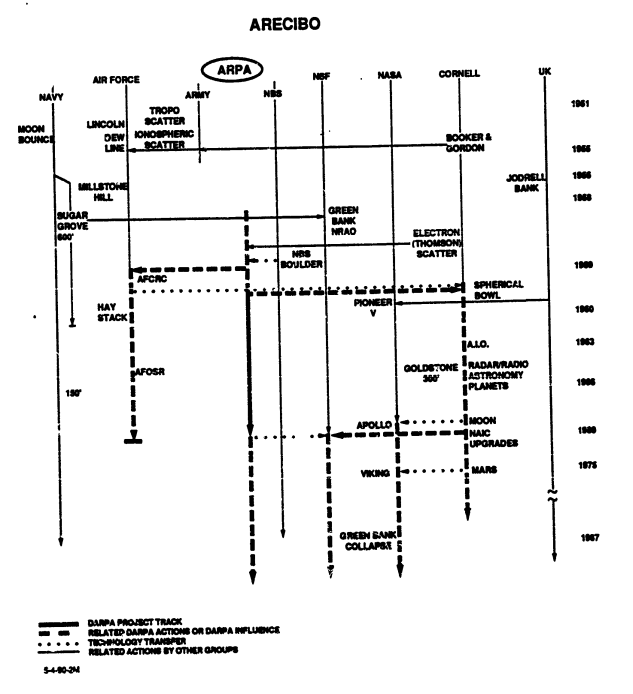
HIBEX (High Booster Experiment) was a 2-year research project to investigate the technology of a very high acceleration, short range anti-ballistic missile interceptor, for hard point: defense. The HIBEX missile achieved nearly 400 g peak axial and over 60 g lateral acceleration, reaching a velocity of nearly Ma = 8, in a little over 1-sec burn time, with pitch over from a vertical ejection from a silo to a trajectory of 15 deg elevation. In 2 more years, UPSTAGE, a maneuvering HIBEX second stage, demonstrated over 300 g lateral acceleration and a side-force specific impulse Isp > 1000 sec using external burning, jet flow control techniques and a laser gyro for guidance. The HIBEX technology furnished the basis for the Army's LoADS short range interceptor program. UPSTAGE jet maneuvering control technology has been incorporated into the SDI's HEDI missile.
A number of early U.S. studies of Ballistic Missile Defense (BMD) indicated that the problem of active defense of restricted-area "hard points" appeared much more tractable than that of defending larger urban areas, the primary emphasis of the Army's NIKE ZEUS BMD project A presidential decision in late 1962 led to the cancellation of NIKE ZEUS and the start of the NIKE X R&D program which involved development of hardened phased-array radars capable of computer-controlled acquisition and tracking of a large number of reentry objects, and a two-stage high acceleration missile, SPRINT, which was to intercept and kill reentry vehicles (RVs) by an explosion of its nuclear warhead at altitudes of about 45,000 ft SPRINT was launched after "atmospheric filtering" had allowed better discrimination of the threat RV from decoys.1
About the time of this Presidential decision, there were also further studies of alternatives to NIKE X, involving a variety of radar and missile systems, with a view to possible future hard point defense.2 Hardpoint BMD appeared to be easier than urban defense for a number of reasons. The defended target is "harder," and the stakes were lower than urban defense. Technically, the radar ranges could be shorter, search could be confined to a narrow "threat corridor," and atmospheric filtering simplified the problem of sorting out the real threat RVs. However, the time for intercept action was compressed into a narrow "window" (see Fig. 3-1) requiring a very high acceleration missile. Also, the hardened large phased array antennas being constructed by BTL for NIKE X were expensive, and economic hard point defense required that such antennas have lower cost
Shortly after the NIKE X decision, ARPA's project DEFENDER commenced investigation of several key advanced concepts for hard point defense, including a high acceleration missile in its HIBEX project, together with the HAPDAR (Hard Point Demonstration Array Radar), a low cost hardened phased array radar.3 Previously, ARPA had investigated other advanced BMD concepts but had not, to this point, undertaken any booster development under DEFENDER. Its earlier CENTAUR and SATURN projects had aimed at space flight and in both cases, after early funding critical to getting them started and some brief technical involvement by ARPA, the major part of the technical development of these vehicles was done by other agencies.3 In the case of HIBEX, in contrast, ARPA was in close control throughout.6
Besides exploring the technical boundaries of high acceleration missiles and the associated control problems, ARPA's interest at the time also encompassed the possibilities of non-nuclear kill of RVs, and the feasibility of firing a second interceptor if the first one failed.7 While the possibilities of using HIBEX alone for intercept were considered, the ARPA concept also included a second stage which might be able to execute the "high g" maneuvers required to "chase" maneuverable RVs, then beginning to be studied.8
At the time of these investigations it was known that propellant wakes could absorb and refract electromagnetic waves. Therefore, the ARPA concept envisioned command guidance from the ground during a "coast" phase of HIBEX flight, after propellant burnout. In the actual HIBEX experiments, however, no attempt was made to do any external guidance. Internal, closed-loop guidance was used.
Preliminary studies of HIBEX indicated (see Fig. 3-2) that accelerations of several hundred g's and burnout velocities of about Mach 8 would be required. HIBEX was to be launched vertically, from a small silo, and afterwards would "pitch over" to a direction suitable to accomplish intercept, requiring high "g" also transverse to its axis (Fig. 3-3).
It did not seem possible, based on information from the initial HIBEX studies, to be able to use a scaled vehicle for tests in the usual scheme of engineering research.
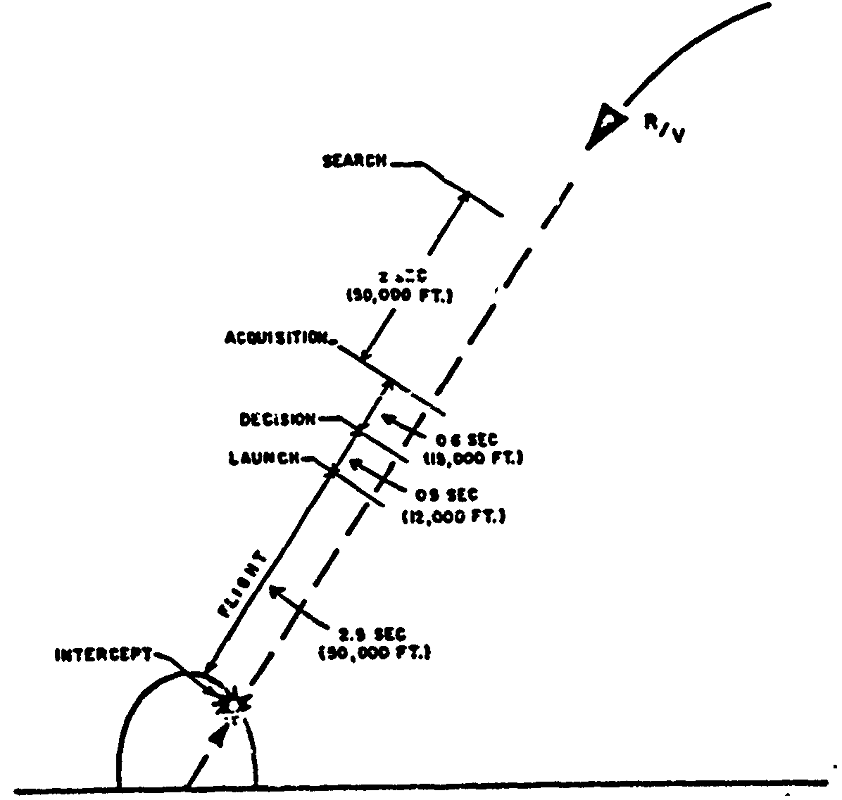
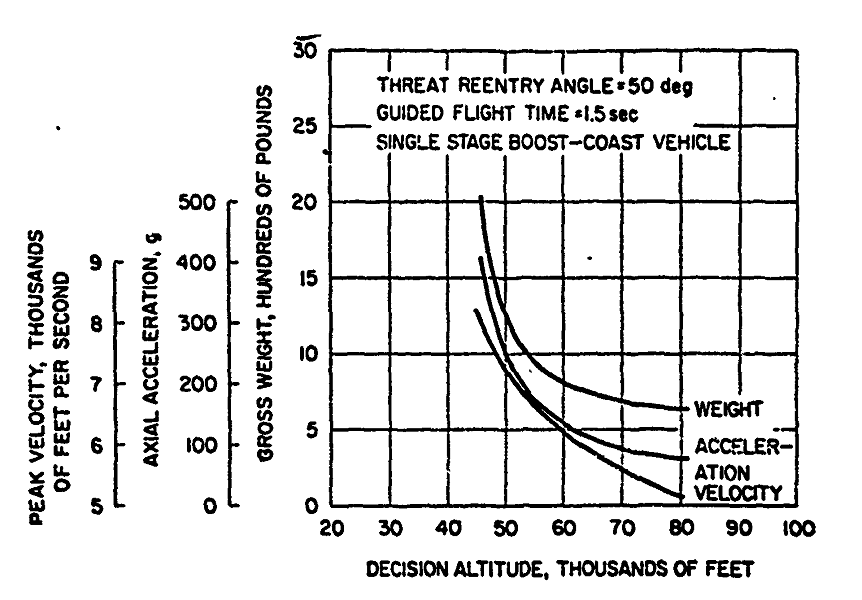
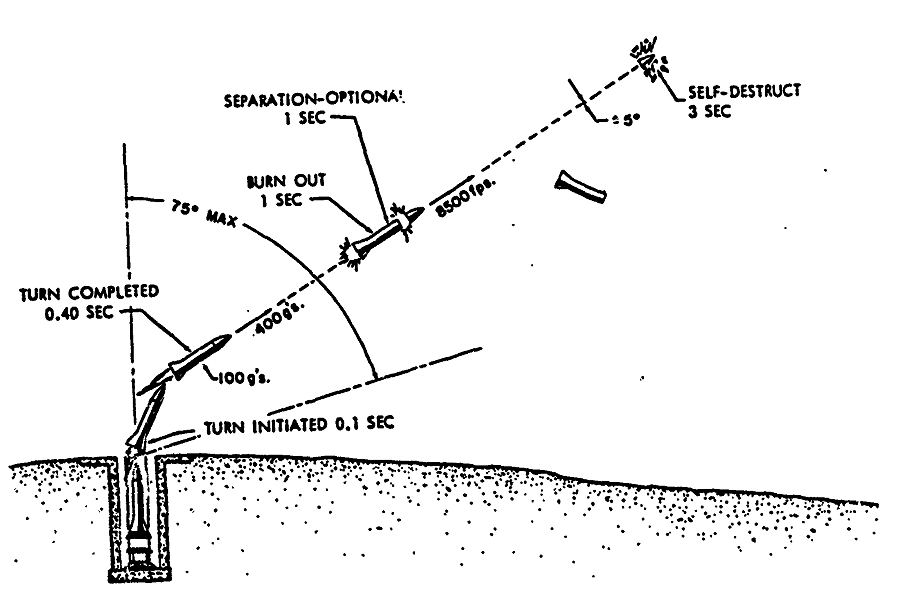
Therefore it was decided early-on, to undertake HIBEX as a series of full scale field tests. This was more risky, but if successful the results could be more convincing. The performance desired was higher than SPRINT'S first stage (although the two-stage SPRINT achieved a higher terminal velocity and a longer flight); also HIBEX would be a much smaller vehicle. As a research program, the boundaries of performance to failure could be explored in HIBEX without the constraints of practicality imposed in engineering a system for production. In contrast, because a near-term production was expected, SPRINT had these kinds of constraints.
In particular HIBEX required a higher burning rate propellant than was available, and one which could stand several hundred "g's" without undue deformation or fracture. Technology was available to increase the burning rate by addition of small metal fragments, and also for strengthening the propellant "matrix," but tradeoffs were required. Measurement techniques had not been developed for such important quantities as propellant strain in the regime of stress expected. Consequently, a series of static firings was made to test successive approximations to eligible propellants.
At the time of HIBEX, aerodynamic characteristics of vehicles in hypersonic flight with large angles of attack were not well known. Wind tunnel tests were performed to assist in gaining understanding of the forces and moments; but the stability of the actual system was somewhat a matter of guesswork, with fortunately compensating errors made in design parameters.9
An outline of early HIBEX requirements is shown in Figure 3-4. Boeing was chosen as prime contractor, with Hercules for propellant development. A large number of measurements were planned for each flight, in accordance with the exploratory nature of the investigation. Besides being in entirely new parameter ranges, the measurement instruments themselves had to withstand very severe environments. The HIBEX flights took place at White Sands Missile Range (WSMR) and took advantage of the telemetry and optical range instruments there. Figure 3-5 shows a cut-through diagram of HIBEX. Strap-down mechanical gyros, the only technology then available, was used for guidance in both stages. The first flight was a test of the booster and did not involve on-board flight guidance. The second and later flights incorporated on-board control and involved tests of thrust vector control in one, and later in two dimensions. Thrust vector control was achieved by injection of liquid Freon, as with SPRINT. The final flights involved maneuvers of 75 deg in pitch and 45 deg in azimuth. In the last (7th) successful flight a second stage incorporated a propellant which was burned externally in order to achieve very high transverse impulse.
Figure 3-4. HIBEX Requirements [10]
|
The original 2-year schedule for HIBEX slipped by 2-months, but six out of seven flights were successful. An explosion at one of the propellant testing facilities required reimbursement11 Such explosions of advanced propellants were not unusual.
|
|
Boost Duration 1.0 Sec |
Figure 3-5. HIBEX Test Vehicle Configuration & Performance (from Moore and Jacobs, op. cit.) |
|
Table 3-1 shows a comparison of HIBEX parameter objectives and achievements. Despite the 2-month extension of schedule, the project was accomplished at low cost with five fewer "shots" then originally contemplated.13
Table 3-1. HIBEX Flight Performance* |
||
|
Item |
Objective |
Achieved |
|
Boost Burn Time |
1.05 Sec. |
1.124 |
|
Burnout Velocity |
8,000 fps |
8,408 fps |
|
Weight of Second Stage |
300 lb |
295-303 lb |
|
Trajectories with Programmed Turns From Vertical To: |
||
|
Elevation |
15 deg. |
15 deg |
|
Azimuth |
±45 deg. |
45-deg. |
|
Burnout Velocity Vector Error |
± 5 deg |
1.8 deg. maximum |
|
Stage Separation |
Favorable for Missile Guidance |
Favorable for Missile Guidance**S |
|
*Source: Moore and Jacobs, op. cit., p. 22. |
||
A HIBEX symposium was held in 1966, to present its results, and several (classified) articles were published later in the Journal of Defense Research.14
Toward the end of HIBEX, some external burning propellant experiments were conducted with encouraging results. A study was then made of a maneuvering second stage interceptor, UPSTAGE, which would incorporate external burning for sidewise thrust.15 PRESTAGE, the immediate follow-on project to HIBEX, was carried out in the 1965-68 time frame, to investigate external burning in a controlled hypersonic flow environment and the corresponding problems of thrust control, axial and lateral.16 "Disposable" vanes were studied along with lateral jets for thrust vector control. PRESTAGE was carried out by McDonnell-Douglas,17 and included laboratory and flight test experiments, using available rocket motors.
After PRESTAGE, project UPSTAGE began in 1968, dedicated to investigation of a second stage for intercepting maneuvering RVs. A HIBEX vehicle was used for UPSTAGE's first stage. The UPSTAGE effort covered second stage separation phenomena, control system, thrust vector control generation techniques and mechanisms, guidance, aerodynamics, structure and communications. The UPSTAGE vehicle was designed with "lifting" aerodynamic characteristics. An important new guidance feature incorporated was a laser optical gyro, which required no "spin-up," and which had been developed partly with ARPA funding.18
External guidance for UPSTAGE was provided by a command guidance link and tracking by the ZEUS target-tracking radar at WSMR. "Finlet" injections were used to provide transverse thrust. UPSTAGE reached several hundred lateral g's with response times of milliseconds. The UPSTAGE maneuvers were controlled in a simulated MARV chase but no actual interceptions were attempted.19 The tests were generally successful and indicated the feasibility of the technology along with a need to better understand external burning.
In another follow-on project Radar Homing On-Board Guided Intercept (RHOGI) was investigated.20
In 1975 a Presidential decision was made to deploy SAFEGUARD, an advanced version of NIKE X, to defend Minuteman missiles, then not considered a "hardened" system. SAFEGUARD involved SPRINT missiles in silos. After Congress voted to keep U.S. BMD in an R&D status, the Army's subsequent HARDSITE and LoADS programs involved a missile similar to HIBEX in general descriptions of weight and size.21 V. Kupelian, ARPA's HIBEX project manager, was for a time in the Army's ABMDA, in charge of missile-related work in terminal BMD. So far, LoADS has been formally cancelled, but the Army apparently considers its technology to be "on the shelf."
The SDI R&D program for wide area defense does not involve a short range terminal defense missile. However, SDI includes HEDI (High Endoatmospheric Defense Interceptor), a missile incorporating UPSTAGE jet maneuvering control in endo atmospheric intercept, but at somewhat higher altitudes than HIBEX's range.22
HIBEX and UPSTAGE were key projects in ARPA's DEFENDER program for hard point defense. In accord with the DEFENDER assignment, these projects explored the boundaries of possible performance of high acceleration missiles for intercept of RVs. HIBEX was widely recognized to have been an impressive R&D achievement. While HIBEX is often compared with the SPRINT system then being built under the Army's BMD program, it must be recognized that SPRINT had the major constraints of a system being engineered for production deployment on a limited time schedule.
UPSTAGE also had a very ambitious objective of demonstrating a capability for chasing MaRV's, a mission not emphasized in the SPRINT system design, and possibly coming close enough for non-nuclear kill. UPSTAGE was successful in demonstrating much of what might be achieved with external burning, but some questions were left for further R&D.23
Through personnel and information, the HIBEX/UPSTAGE technology as well as other aspects of the ARPA hard point defense program seems to have been effectively transferred to the Army. Treaty restrictions have allowed only R&D on the HARDSITE and LoADS concepts. The Army did build and test a hardened phased array radar, and the success of HIBEX is indicated by the fact that the LoADS interceptor missile has not had a development program, but is described as having gross characteristics similar to HIBEX24 and is regarded as "off the shelf," readily available technology. The ARPA-developed laser inertial guidance system is regarded as readily available also. SDI does not include a missile like that in LoADS probably because SDI is aimed primarily at area, rather than terminal defense. SDI's HEDI missile for high endoatmospheric intercept however, does incorporate UPSTAGE jet maneuvering technology.
From project records ARPA outlay for HIBEX appears to have been about $25 million and for UPSTAGE (including PRESTAGE) about $26 million.
1 ABM project history. Bell Telephone Laboratory, Oct. 1975, p. 1-33, ff.
2 Eg.. Intercept X. conducted by IDA.
3 AO 510 of 9/S3, HIBEX, and AO 516 of 10/63. HAPDAR.
4 From "Introduction for HIBEX." by V. Kupelian, Bulletin of the 20th Interagency Solid Propulsion Meeting, July 1964. Vol III, p. 338 (declassified).
5 CENTAUR and SATURN are discussed in Chapters IV and V of Volume I.
6 Discussion with V. Kupelian, 12/87.
7 Discussion with A. Rubenstein, 11/87.
8 A. Rubenstein and V. Kupelian, ibid. One such MaRV was ARPA's MARCAS. AO 569 of 4/64.
9 Discussion with V. Kupelian, 12/87.
10 From "HIBEX Booster Development" by E.V. Moore and A.M. Jacobs, Bulletin of the 20th Interagency Solid Propulsion Meeting, July 1964, Vol IV, p. 39, (DECLASSIFIED).
11 AO 93 of 5/66, HIBEX Explosion Payment $ 0.5 million.
12 HIBEX Final Technical Report, Boeing, March 5,1966 (DECLASSIFIED), p. 22.
13 Boeing, ibid., p. 396.
14 "HIBEX," an experiment in high acceleration boost for BMD, by CR. Smith, Journal of Defense Research, Vol. 2A, 1970, p. 170 (CLASSIFIED).
15 AO 595 of 7/64, UPSTAGE
16 AO 765 of 8/65, PRESTAGE.
17 Douglas had also been the NIKE ZEUS SPRINT contractor.
18 AO 744 of 6/65.
19 V. Kupelian, ibid.
20 AO 873 of 3/66.
21 Thomas M. Perdue, et al., "Low Altitude Defense for MX (U)," Journal of Defense Research, 82-3, 1982.
22 AIAA Assessment of Strategic Defense Initiative Technologies, March IS, 1982, p. 32.
23 Project UPSTAGE. Progress Report, May 1968, McDonnell Douglas Company (CLASSIFIED). See also "Interaction Control Techniques for Advanced BMD Interceptors," by D.F. Hopkins, et. al.. Journal of Defense Research, Vol. 9,1979, p. 274.
24 Perdue, op. cit
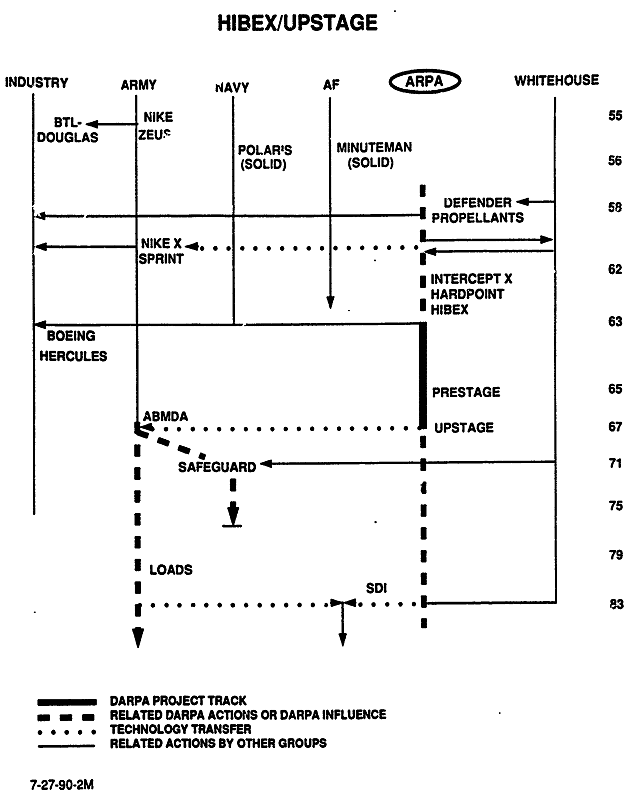
Through project DEFENDER, ARPA made early contributions to the capabilities of ICBMs to penetrate Soviet Ballistic Missile defenses. A direct assignment by DDR&E in 1961 led to a dedicated ARPA effort on advanced offensive technology for assuring penetration by United States ICBMs, which included support of the Pen X study recommending use of MIRVs. In the mid 1960s as part of the ARPA joint Service-ABRES program, ARPA developed several advanced technology options for possible use as penetration aids (PENAIDS), including observables management, jammers, chaff, and reaction-jet controlled manuevering reentry vehicles (MARVs).
In late 1957, shortly after Sputnik, the DoD established the Reentry Body Identification Group (RBIG) to consider whether measures should be taken to assure that U.S. ICBMs could penetrate possible Soviet ballistic missile defenses (BMD).1 The RBIG concluded that the possibility of BMD should indeed be taken seriously and recommended that research be pursued on countermeasures, which later were called "penetration aids" (PENAIDS).2 The countermeasures considered by the RBIG included: decoys, chaff, jamming, possible use of missile tankage and other fragments other than the reentry vehicles (RVs) carrying the ICBM warhead; reduction of the RV radar cross-section; the "blackout" that could be produced by a "precursor" nuclear explosion in the upper atmosphere; and using multiple warheads to saturate the defense.3 The RBIG considerations were remarkably comprehensive; most of the work on PENAIDS in the following years was along one or another of the lines suggested by that group.
The Bradley subcommittee of the President's Science Advisory Committee, (PSAC) convened a little later, reviewed the ICBM penetration problem again and pointed out that while decoys or chaff should work to some extent outside the earth's atmosphere, there were many unknowns in the phenomena of RV reentry into the atmosphere. Some of these unknowns, the Bradley group pointed out, were at the quite fundamental level of properties of atoms and molecules existing in the hypersonic shocks and wakes occurring in reentry, and in the even more complex conditions that would be caused by nuclear explosions.
In the burst of post-Sputnik U.S. Government activity in early 1958 leading to the formation of ARPA, one of its first major assignments--and the one then stated to be the top priority--was project DEFENDER, to look into advanced aspects of ballistic missile defense beyond those approaches being developed and produced by the Services; chief among these was the NIKE-ZEUS BMD system being built by the Bell Telephone Laboratories for the Army.4 It was understood even at these early stages that the BMD and penetration problems were two sides of the same coin, so to speak, and that any approaches to solutions of both required a common scientific understanding of the observable phenomenology of ICBM flight, from launch to reentry. The second priority of the ARPA program hid to do with accelerating development of space technology, especially for surveillance satellites, which were required to more certainly determine features of the ICBM threat5
At this time most attention was being given, in both the Air Force and Navy ballistic missile programs, to getting the missiles (and in the Navy also the Polaris submarines) built and deployed. There had been concern for some time in these programs about how to design and construct RVs to assure their survival of the intense heating of reentry. Two broad approaches to the survival problem had been followed, one using blunt-nosed "heat sinks," and the other involving ablation of outer layers of RV material, which might permit use of a more slender RV body. The expectation that nuclear explosions would disturb the reentry environment added the requirement for the RVs to withstand the associated heating and nuclear radiations. It was clear early-on that RV materials and aerodynamic shapes were inter-related and both would have strong effects on reentry observables. Some of the first steps in the ARPA DEFENDER program were toward obtaining good full-scale data as soon as possible on reentry phenomena, using the U.S. missile test program just beginning.6
The proceedings of early ARPA meetings on project DEFENDER indicate the wide range of current activity, reflecting the RBIG guidance, including: field measurements and the associated radar, infrared and optical instruments needed to make them; fundamental atomic and molecular physics involved in reentry phenomena; nuclear effects; effects of hypervelocity impact of dust, rain and projectiles on RVs; decoy packaging and discrimination; ICBM fuel tank explosion effects; exoatmospheric infrared detection of cold decoys; interceptor flight characteristics; directed radiation weapons; and radar component technologies.7 Some of the earliest missile flight tests included decoys and chaff.8
One of the earliest explicit scientific discussions of an approach to a penetration aid, an RV with low radar cross-section, was given by a scientist from the United Kingdom at an early review for ARPA's Ami Missile Research Advisory Committee (AMRAC) in 1960.9 Recognizing that much exploratory and research work had to be done in DEFENDER, ARPA held a series of meetings at which such scientific papers were elicited in order to more clearly define the status of understanding. The U.K. scientist pointed out the advantages of a slender conically shaped RV for lowering radar observability, and outlined several other general approaches to reducing radar cross-sections.10
Also in the early 1960s, the Air Force's FORECAST I study recommended that conically shaped RVs be used because with a high weight-to-drag ratio (usually termed "Beta"), these could give greater accuracy and, would penetrate further before slowing down than would blunt-nosed RVs.11 Conical-shaped RVs were in fact developed by the Air Force in the early 1960s to use on follow-ons to Minuteman I missiles.12 But blunt-nosed RVs continued to be used for some time on the larger ATLAS and TITAN ICBMs.13 It was soon appreciated that the observables and PENAIDS for the blunt and slender RVs would be quite different14 Also, while slender conical shaped RVs would have the advantages of lower shot dispersion and radar cross-sections, these also had severe volume constraints and would be subject to high thermal and aerodynamic loadings during reentry.15 In turn, these thermal and aerodynamic factors affected RV observables, such as radar fluctuations due to body geometry and motion and the high temperature wakes affected by "seeding" by RV material ablation and evaporation.
It became clear relatively soon that what had been considered simple exoatmospheric PENAIDS, such as chaff, in fact involved complex practical difficulties, such as ejection of long wires in order to obtain a satisfactory distribution of scattering objects in space. It was also clear quite soon that "atmospheric filtering" would likely be the most effective means for BMD to sort out RVs from reentering decoys and other fragments. The implication was that to penetrate terminal BMD one would have to develop decoys with Beta comparable to those of the RVs and with similar wake phenomenology, but under constraints of small weights and volumes this was a difficult task.
In the late 1950s and early 1960s there was growing evidence of a serious Soviet BMD program.16 In late 1961 Dr. H. Brown, then DDR&E, assigned ARPA the task of providing the Joint Chiefs' Weapons System Evaluation Group (WSEG) the task of providing technical inputs for their study of the capability of U.S. ICBMs to penetrate Soviet BMD, and to develop a comprehensive base of related technology.17 In early 1962 ARPA commenced a dedicated PENAIDS program.18
At about the same time as the PENAIDS assignment ARPA provided funds for the TRADEX measurements radar and other measurement instruments at Kwajalein where NIKE-ZEUS tests were to be conducted, and also commenced investigation of new BMD concepts. For exploration of one of these new approaches to BMD, called ARPAT, the AMRAD high-resolution measurement radar was constructed at the White Sands Missile Range (WSMR). It was anticipated that using AMRAD and the NIKE-ZEUS radars already at WSMR, together with multistage missiles which would augment reentry velocity to that of ICBMs, would be advantageous for testing RVs and penetration aids, as well as new BMD concepts, for reasons of economy, efficiency, and security. This early ARPA program provided for on-board RV measurements of reentry wake and hypersonic shock layer properties; exploration of nuclear effects; investigation of the properties of RV materials as these were affected by thermomechanics of reentry; radar, IR and optical observables; and active jamming by decoys.19 Studies were also commenced on the overall "system" and cost effectiveness of the balance between ICBM penetration options and BMD.
In late 1962 DoD commenced the joint Services-ARPA ABRES (Advanced Ballistic Reentry Systems) program, to more directly coordinate under DDR&E all the efforts related to ballistic missile penetration in the exoatmospheric and terminal reentry phases. Apparently some initial funding for ABRES came through ARPA, but in early 1963 management responsibility was given to the Air Force which had the major part of the program, while DoD conducted regular monthly review and coordination meetings.20 As its part of ABRES, ARPA continued investigations of advanced penetration aids and provided critical measurements using the PRESS sensors at Kwajalein.21
In the early 1960s there were increased concerns and sharper technical appreciations of the characteristics of Soviet BMD which U.S. ICBMs would have to penetrate. The Soviets conducted some large nuclear tests and, significantly, also a "live" test of a BMD system under conditions involving nuclear explosions-something never done in the United States programs.22 The United States NIKE X program also indicated the characteristics of a sophisticated BMD system that might eventually be developed by the Soviets.
One of the immediate reactions to these new threat developments and concerns was the Navy's upgrade of the penetration capabilities of the Polaris missile system with multiple reentry vehicles (MRVs).23 The MRVs all would have the same urban target, but would complicate the Soviet problem of BMD--the assessment was that the Soviet system, like the earlier NIKE ZEUS, would have difficulties handling multiple RVs.24 Also in the early 1960s, the Air Force FORECAST I study had pointed out the possibility of multiple independently targeted reentry vehicles (MIRVs). A number of relatively independent technology developments, in this same time frame, for satellite deployment and for separation of RVs in ICBM tests, also suggested the MIRV possibility.23 The decisive push to U.S. MIRV development, however, appears to have been due to other factors: a Strategic Air Command requirement to be able to attack 3,000 Soviet military targets, and the decision by Secretary of Defense McNamara, on economic grounds, to limit the AF ICBM force to 1,000 Minuteman missiles -- a direct incentive for each Minuteman to have multiple high-accuracy warheads.26
To get a clearer picture of the cost-effectiveness of different "mixes" of penetration aids (other than warheads) and MIRVs, the DoD commissioned the Pen X study, a large-scale 6 month effort conducted by IDA and budgeted through ARPA.27 The Pen X results indicated that MIRVs had several advantages, but that a "mix" of MIRVs with other penetration aids would also be useful under many circumstances.28 Pen X appears to have influenced subsequent DoD decisions generally favoring the use of MIRVs.29 Up to this time, most of the activity regarding PENAIDS had been on paper.30 However, the Air Force, then and later, did not give PENAIDS a high priority.31
The large size of the Soviet Galosh BMD missile, exhibited in late 1964, indicated a capability for long-range intercept, with a large nuclear warhead. With this new background, in the mid-1960s ARPA undertook investigation of a number of exatmospheric PENAID approaches. Along the lines of the first early ABRES emphasis on LORVs (low observable RVs) ARPA investigated new radar-absorbing RV materials, "impedance loading," active ECM, and related power supplies.32 While much of this early LORV effort appeared not to have been not very successful, at least one ECM approach, developed in part through ARPA efforts, seems to have met with some acceptance as a possible PENAID.33
Another major ARPA PENAIDS effort in this period was HAPDEC (hard point decoy), a decoy-RV combination which would involve wake and radar cross-section "management" to make discrimination more difficult down to low altitudes where hard-point terminal defenses would operate.34 HAPDEC was designed during a time when ARPA started several efforts on hardpoint defensive technology which could be assumed to be eventually "mirror-imaged" by the Soviets. HAPDEC was flight-tested in the ABRES program, but seems not to have been adopted due, in part, to weight and complexity.35
In the early and mid-1960s several analyses were done of the possibility of MARVs. Some of these approaches involved guiding flaps, or change of RV body shape. The possibility of MARV attack on hardpoint defensive systems motivated ARPA's HIBEX/UPSTAGE program, having a second-stage UPSTAGE interceptor capable of reaction-jet controlled maneuvers.36 A little later similar reaction jet technology was applied in the ABRES-ARPA MARCAS (Maneuvering Reentry Control and Ablation Studies) MARV program.37 A number of successful MARCAS flight tests were conducted at WSMR.38 However, scaling up the MARCAS jet control technology apparently involved unacceptable weight penalties.39
During the mid-1960s work on PENAIDS (both system and technology oriented) was at its peak. At that time both the Navy and Air Force had PENAIDS systems work going on for POLARIS/POSEIDON and Minuteman, as well as the ABRES program.
Expenditures amounted to several hundred million dollars per year. ABRES alone was supported at just under $150 million/year.
After transfer of defense-oriented DEFENDER projects to the Army in 1967-8, ARPA's PENAIDS activity was also reduced and characterized in ARPA statements as "mature."40 Subsequent ARPA activity, related to both PENAIDS and BMD, moved more toward exploration of exoatmospheric optical and IR phenomena, and means of obscuring or detecting these.41 This ARPA work has contributed to the database for SDI and countermeasure technology for the Air Force's efforts in follow-ons to ABRES, now conducted under the Air Force Advanced Strategic Missiles Systems (ASMS) Program. Related midcourse observations useful for ABRES ASMS, and also for BMD, continue to be made at the ARPA-built AMOS optical and IR telescopes and imaging radars. Similarly useful data continue to be obtained by the ARPA-built sensors at the Army's KREMS (Kwajalein reentry measurement system) site.
The early RBIG study gave a comprehensive outline of the areas of research required for PENAIDS and BMD. The subsequent DoD PENAIDS assignment, together with the earlier DEFENDER assignment, put ARPA in the unique position of being a key participant in both the offensive and defensive aspects of BMD. For both aspects, also, ARPA was to be a source of independent and critical technical information for DoD. ARPA's contribution to both aspects may have been greatest through the PRESS measurements of reentry phenomena at Kwajalein. Other aspects of the DEFENDER program, such as investigating nuclear effects, and vulnerability of RVs to non-nuclear attack, also made important contributions to the development of PENAIDS. DoD took a strong direct role in control of the PENAIDS efforts about 1963, with the Pen X study and the institution of ABRES, which ensured coordination and technology transfer, while the Air Force conducted the major part of the program.
ARPA's direct contributions to PENAIDS technology, while real, do not seem to have had a major impact Apart from MIRVs which apparently had multiple origins, PENAIDS were a substantial factor in the U.S. ICBM and SLBM developments.
PENAIDS were deployed on Minuteman I and II and POLARIS and were developed for Minutmen II and TRIDENT L The PenX study appeared to have had an effect on the DoD-level decision on MIRVs. While the use of conical RVs seems to have been accepted quite early, mainly on grounds of their accuracy, their low radar cross-section seems also to have been considered a sufficient PENAID against the then estimated Soviet BMD threat. It apparently took a long time, from 1963 to 1976, to arrive at a satisfactory RV nose cone.
Two former long-term participants in ABRES on direct query, while agreeably crediting ARPA with contributions to advanced PENAIDS technology development (which were formally or informally transferred to ABRES) could not recall any major impact of the specific ARPA-supported efforts.42 These directors also felt that the PENAIDS program had been under-funded, through most of its life and not a major Air Force priority. While initially this may have been due to a low appreciation of the BMD threat, apparently the feeling grew within DoD in the early and mid-1960s that saturation of enemy defenses was the appropriate offense-conservative tactic because unexpected advances in decoy discrimination techniques, which could not be entirely discounted, could rapidly degrade RV penetration capability.43 Later, the BMD treaty removed much of the impetus for PENAIDS-related efforts.
ARPA expenditures directly for PENAIDS, from project records, appear to have been about $25 million to 1968.
1 H.F. York, "Multiple Warhead Missiles," Scientific American, Vol. 229, No. 5,1973, p. 71.
2 There had been previous study by RAND and others of the ICBM penetration problem, and the White House-level Gaither Committee had a panel also led by W.E. Bradley, which considered possibilities of both ballistic missile defense and offense.
3 DJ. Fink, "Strategic Warfare," Science & Technology, Oct. 1968, p. 59.
4 House Subcommittee on DoD Appropriations, 198S Congress, 2nd Session. Hearing on the Advanced Research Projects Agency, April 25,1958, testimony of R. Johnson, p. 292.
5 Ibid.
6 E.g., W.R. Hutchins, "ARPA FY 1959 Program," ARPA BMD Technology Program Review, 3-14 Aug. 1959, p. 13, (declassified). In 1960, ARPA noted that U.S. data on our own reentry objects were generally from off-axis broadside observations near Ascension Island. Any terminal defense (e.g., NIKE ZEUS) required looking head-on at RVs. So ARPA funded the DAMP ship in June 1961 to make observations head-on of U.S. RVs launched from Patrick Air Force Base into the Atlantic. Radar, optics, and IR sensors were placed aboard the DAMP ship. Observations included RV oscillations and radiation from reentry objects. Discussion with A. Rubenstein, IDA 7/90.
7 ARPA 1959 BMD Review, Table of Contents-much of this early ARPA effort was carried out under AOs S and 6 of 4/59, with many tasks. AO 39 of 3/59 included a task on Decoy Packaging.
8 E.g., Summary of KREMS Tests Through 30 June 1979, Lincoln Laboratory, 1979 (CLASSIFIED).
9 T. Pawson, "Radar Camouflage Aspects of the Blue Streak Re-entry Head Design," AMRAC Proceedings, Vol. II, July 1960 (CLASSIFIED).
10 T. Dawson, ibid., and K. Siegel, et al., in Journal of Missile Defense Research, 4, No. 4, p. 379 (CLASSIFIED).
11 Discussion with BGen. R. Duffy (Ret), 5/90.
12 First Minuteman RVs were blunt.
13 Due to their large warheads, the Soviets had less need for accuracy and used blunt-nosed RVs for some time. Cf.. ABRES 1962-ASMS 1984, TRW, Inc., 1985. p. 15 and p. 2.
14 A Grobecker, "Parametric Considerations for Design of Penetration Aids," IDA TN 61-27, Dec. 1961 (CLASSIFIED).
15 Apparently a satisfactory solution to these problems was not achieved until the mid 1970s (TRW, op. cit).
16 Sayre Stevens, "The Soviet BMD Program," in Ballistic Missile Defense, Brookings. 1984, p. 182 ff.
17 Richard J. Barber, History, p. V-24, quotes the memo from H. Brown, DDR&E, giving the assignment.
18 "Second Report of IDA Committee on Penetration Effectiveness of Decoyed ICBMs," IDA TR 62-14 (CLASSIFIED).
19 AO's 413, 415, 440, 441.
20 SAMSO Chronology, USAF Space Command, 197S, p. 123. The ABRES meetings were first chaired by the then ADDR&E for missile defense, D. Fink.
21 PRESS is discussed in Chapter I of this volume.
22 Sayre Stevens, op. cit, p. 193.
23 H. York, op. cit., p. 22.
24 R. Duffy, op. ciL
25 H. York, op. CiL, p. 18.
26 I. Getting, All in a Lifetime, Vantage 1989, p. 479.
27 AO. 741 of 6/65.
28 The PenX Study, IDA R-112 (Summary) August 1, 1965, (CLASSIFIED).
29 R. Duffy, op. cit, and Richard J. Barber, History, p. VII-9.
30 Fink, op. cit, p. 59, R. Jayne. The ABM Decision," MIT Thesis, 1975, p. 257, and R. Duffy, op. cit.
31 Duffy, op. cit, and discussion with MGen. Toomay (Ret) 4/90.
32 AOs 679,705,779,803.
33 TRW, op. CiL
34 HAPDEC, AO 920 of 9/56. 3* TRW, op. cit, p. 15.
36 HIBEX/UPSTAGE is discussed in Chapter III of this Volume.
37 AO 929, of 10/66.
38 AMRAC Proceedings, 1968 (CLASSIFIED) contains several papers on MARCAS.
39 Duffy, op. cit, and TRW, op. cit
40 PJ. Friel. "Project Defender. Progress and Future," AMRAC Proceedings, Vol. XVIII, 1967, p. 87 (CLASSIFIED).
41 E.g., AO 1846, Plume Physics, and PJ. Friel, op. cit
42 Duffy and Toomay, ibid.
43 T. Greenwood, Making the MIRV: A Study of Defense Decision Making, Ballinger, 1975, Appendix A, p. 163.